

Pan-Fried Tempeh Soba Noodle Bowl

This pan-fried tempeh soba noodle bowl features tender slabs of tempeh, a bright herby tahini sauce, and nutty buckwheat (soba) noodles. It is a satisfying high-protein plant-based meal that comes together in about 40 minutes.
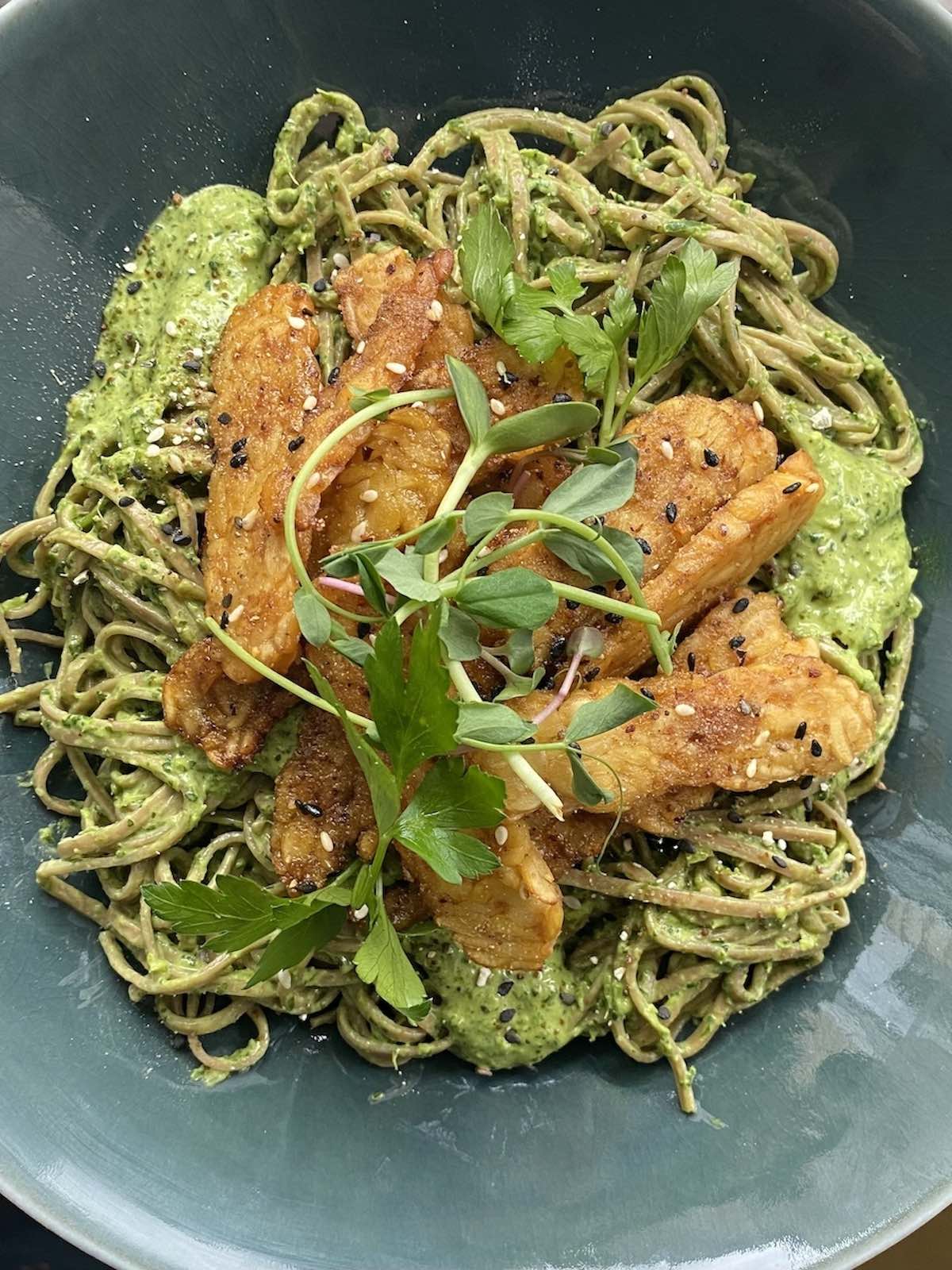
If you are excited to make a recipe using tempeh, but are not familiar with it, you may want to read more details about the cooking method, here in my guide for How to Cook Tempeh So It’s Tender (Not Bitter), which also highlights two other recipes I’m working on (NOTE 9/16/2026- stay tuned for the above mentioned guide and additional recipes. I am still working on them. This recipe is my OG tempeh recipe).

Recipe Recap
~This recipe uses a simple blanch, marinate, pan-fry method to cook up delicious, high protein, high fiber tempeh to eat with nutty soba noodles and a Thai inspired tahini sauce.
~Plan of attack:
1. blend up the tahini sauce ingredients. 2. slice tempeh, then blanch and drop in marinade 3. while noodles cook, quickly pan sear the tempeh slices, then toss tempeh, noodles and sauce together to serve.

Ingredient Notes
- Tempeh – if you’ve read this far, you understand that tempeh is a soybean product and as such is one of the foods to eat regularly based on the Mediterranean food pyramid.
- Noodles – this recipe calls for Soba noodles which are made either from 100% buckwheat or a combination of buckwheat and wheat flour. I chose if for the whole grain ingredient with great flavor and a tender bite.
- Green Tahini Sauce – A Thai inspired tahini sauce, is blended up quickly and easily, once you have the ingredients.

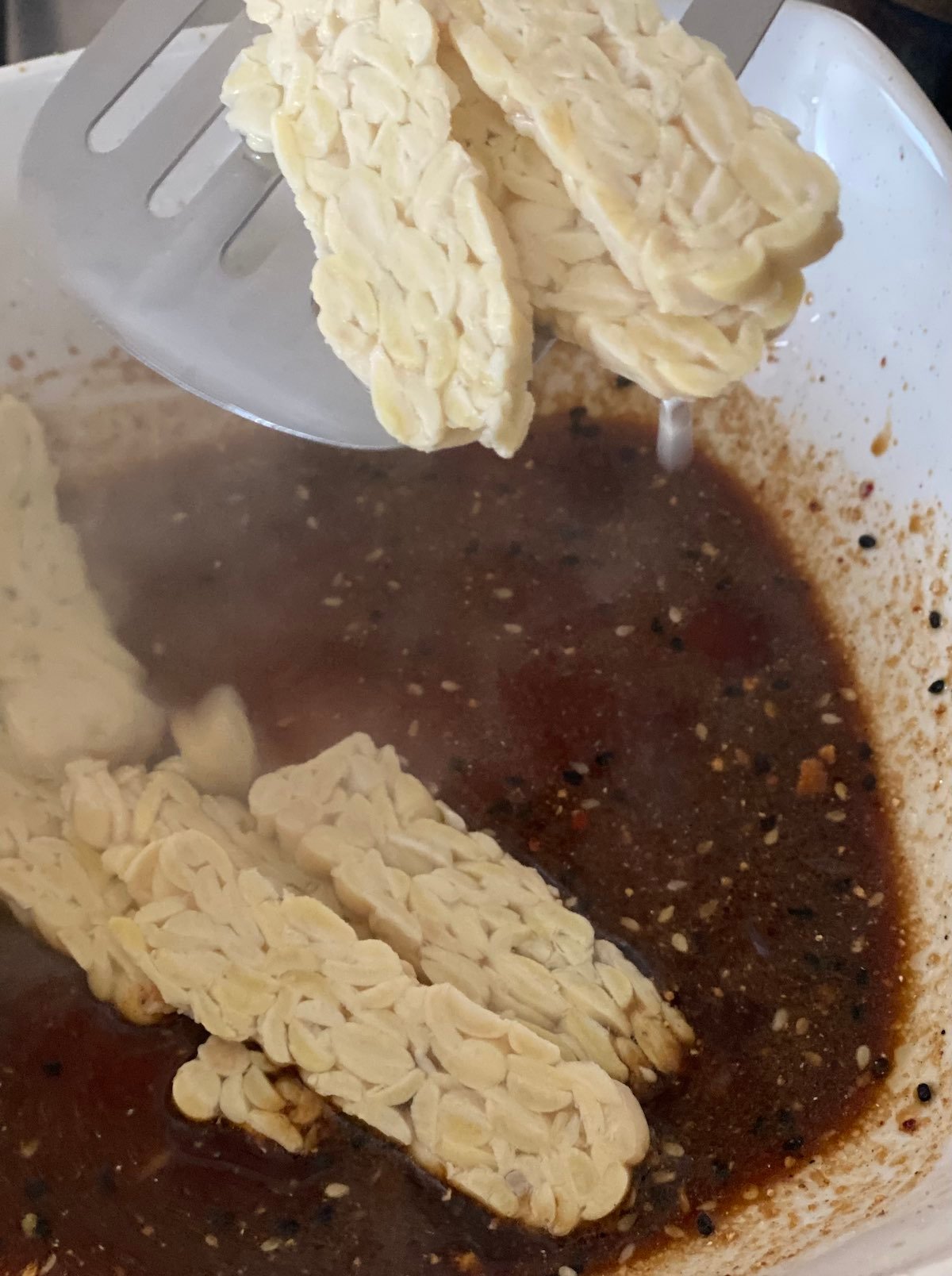
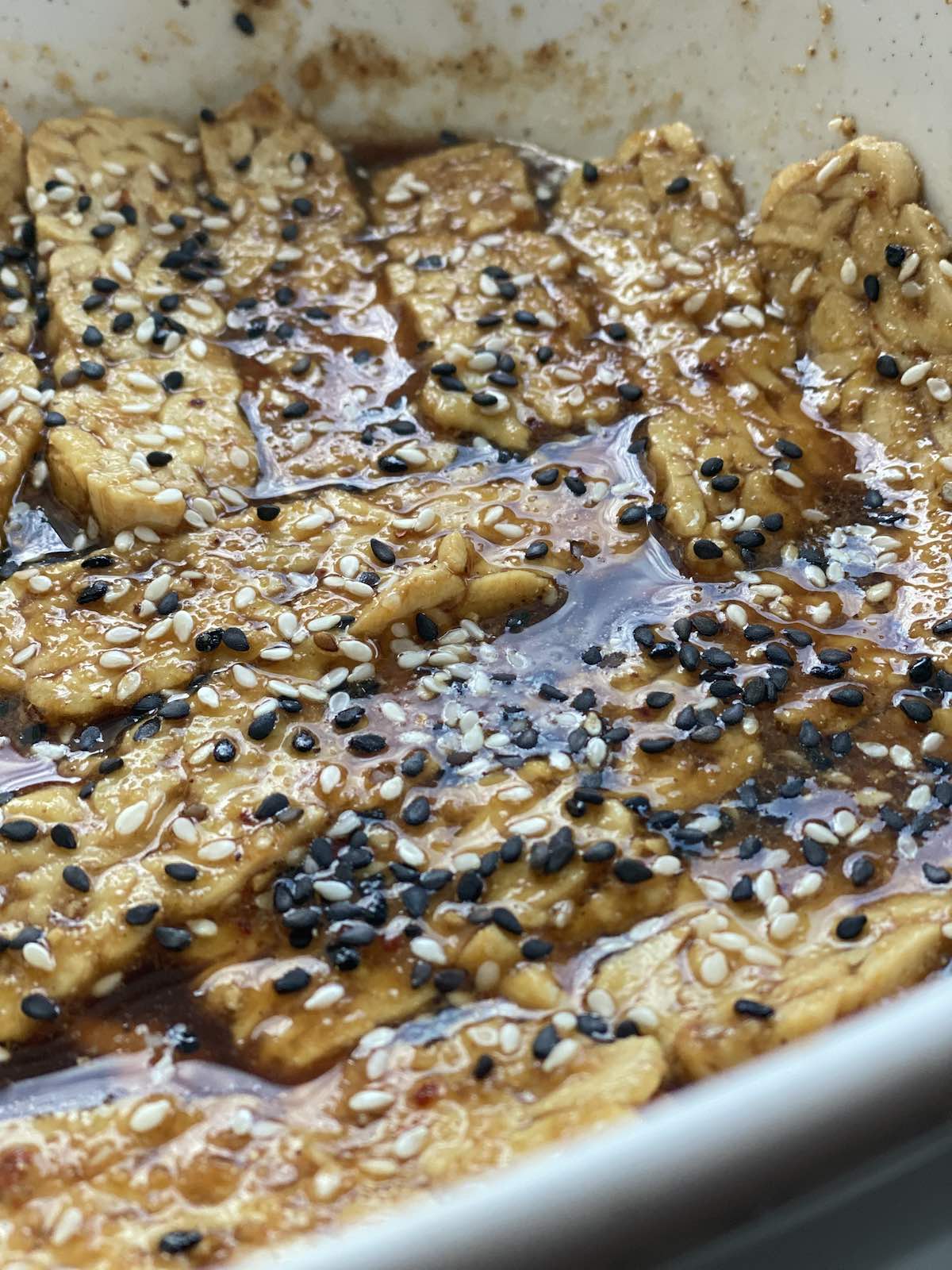
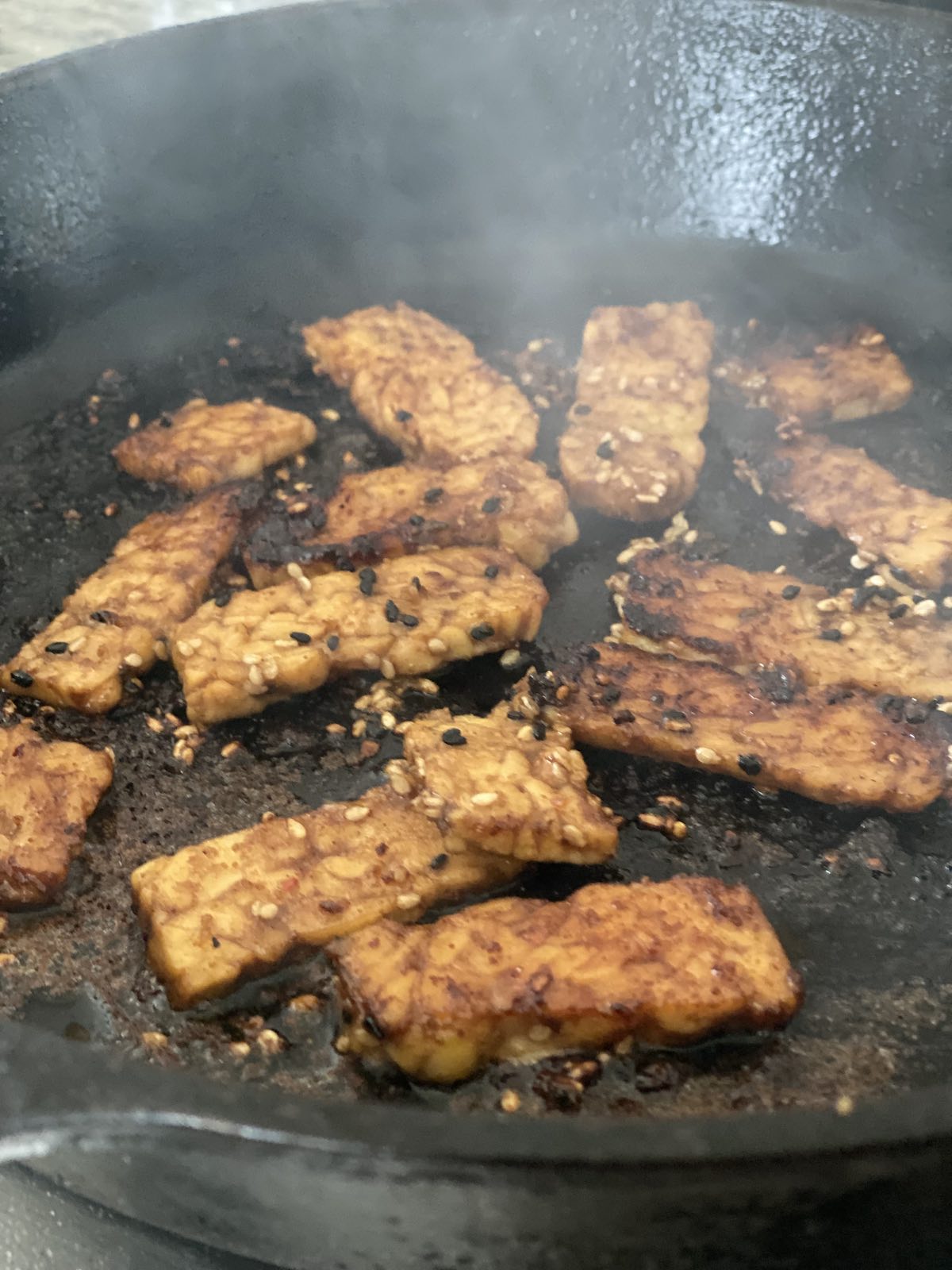
Above: 1. Blanched slabs of tempeh being moved from water to marinade. 2. Slabs of tempeh sitting in marinade. 3. Pan frying tempeh on the second side in cast iron pan (any type works).


Above: 4. Uncooked soba noodles often come in smaller bunches that serve two, so check the package. 5. cooked soba noodles. 6. Ideally drop the cooked noodles directly into the sauce with tongs.
Step-by-step instructions
- Prepare the tempeh – I recommend mixing the marinade, parboiling the tempeh, and placing it in the marinade first, so it can marinate while you prepare the tahini sauce. Alternatively, parboil the tempeh earlier in the day or a day or two ahead, and let it marinate overnight(s) for even more flavor, and to save time on the day you make the recipe.
- Make the tahini sauce – This too can be prepared earlier in the day or a day or so ahead to make prep on the day you make the recipe incredibly fast (less than 30 minutes!).
- Stir fry the tempeh – this happens in tandem with cooking the noodles. A bit of oil is heated in a saute pan over medium-high heat and the tempeh is laid in the pan and left to cook without disturbing for a couple of minutes, then flipped once you see the underside is golden (the soy in the marinade may even char a bit) for the other side to cook. Meanwhile, the pot of water is on the burner to boil.
- Boil the noodles – This is the last step. I recommend using tongs to move the cooked noodles from the pot of boiling water directly into a bowl with all the tahini sauce so that a bit of the noodle water ends up in with the noodles and sauce. It just helps create a nice creamy texture.

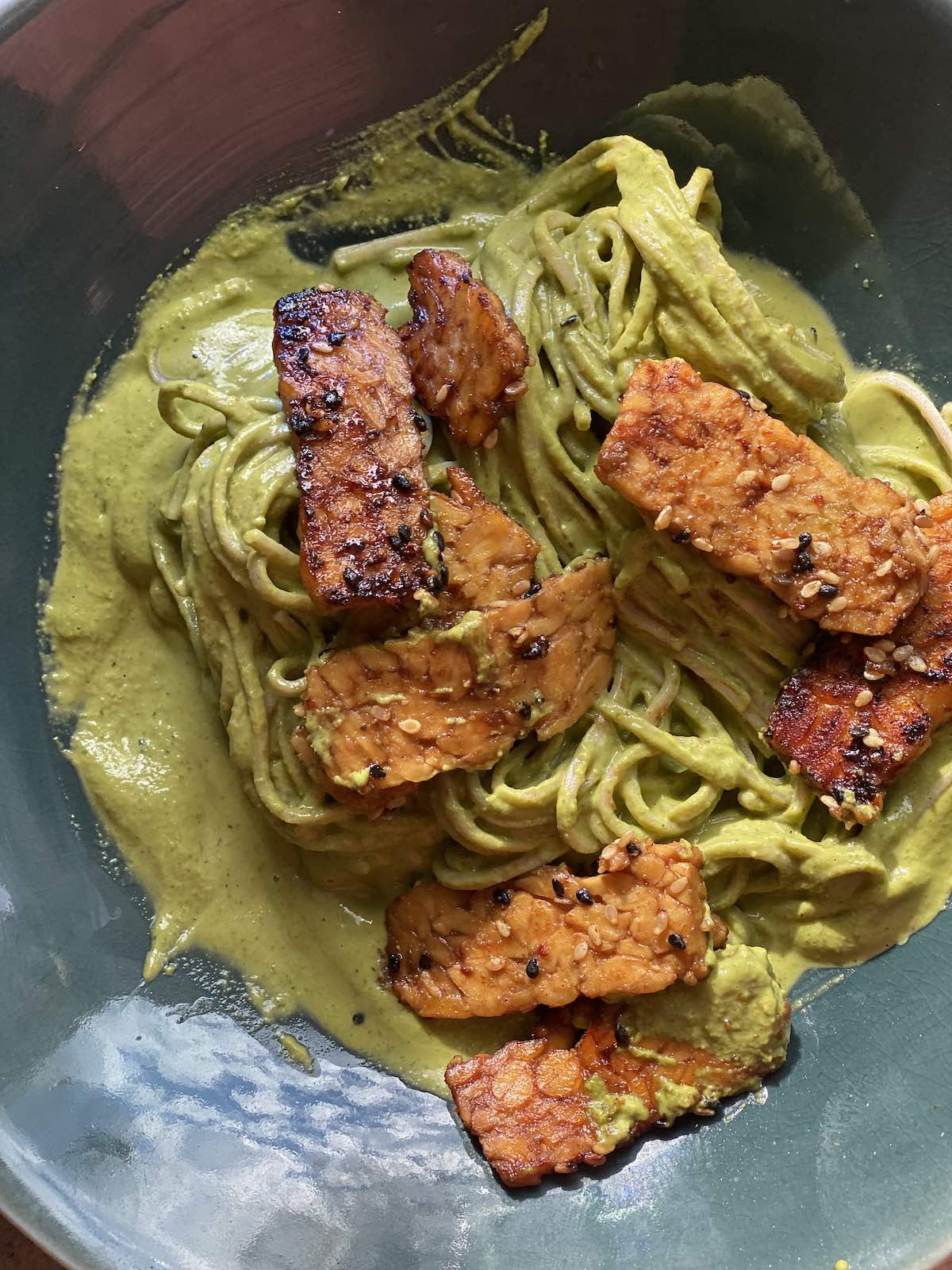

Above: 7. Gently mix cooked noodles with sauce using tongs. 8. Add most of cooked tempeh (save some to place on top). 9. Toss tempeh slices into noodles and sauce using tongs.
Serving, Reheating, Substitutions
- Serving – A simple toss and turn of the tempeh, noodles and sauce and this dish is ready to eat. I like to save a few of the tempeh slices to go on top. The herbs/scallions in the sauce add plenty of nutrition but if you want more vegetables, you can add some to stir fry with the tempeh, once it’s been browned. In warmer weather, it works to rinse the noodles under cool water in a colander and toss with the sauce and cooked tempeh for a cold dish.
- Reheating – I don’t recommend pan frying any leftovers, as the tahini tends to seize up (to many solids in it, so it sticks). A quick microwave or eating leftovers cold both work.
- Substitutions – you can toss it with any other tahini sauce you prefer. If you don’t have soba, or do not like them, I find 100% whole grain thin spaghetti (I love the Barilla brand) is a great substitute for Asian noodle dishes that is full of nutrition. Using rice or brown rice traditionally used in many Asian dishes is certainly an option as well.
- Serving options – The recipe is written (and the feature photo shows) for the noodles and tempeh to be tossed together with the tahini sauce. Below shows another nice option which is to serve the green tahini sauce drizzled over the plain noodles, and the tempeh placed on top of that. This might be the best looking option if you are serving it at the table to guests.
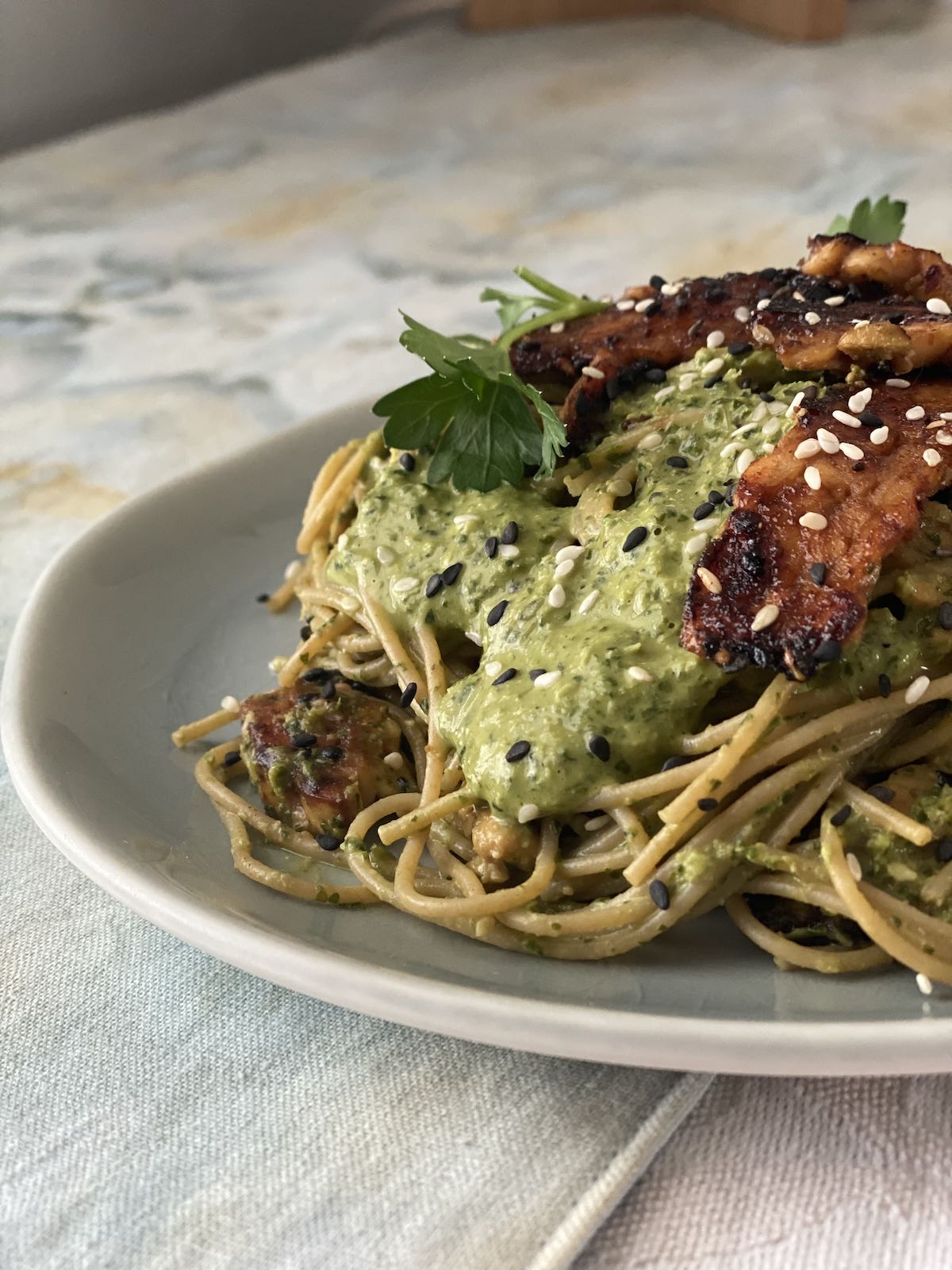
Above: Here I used whole wheat spaghetti noodles, and added most of the sauce on top of noodles, with tempeh on top of that. Nice way to taste the Herby Tahini Sauce more.
FAQs
Boiling or steaming for 5 minutes is the best way to remove any unpleasant taste you typically encounter when eating raw tempeh. See above for details. I parboil it in this recipe.
Similar to tofu it can be sliced, cubed or crumbled depending on what your recipe is. In this recipe I use thin slabs for tender and juicy marinated tempeh. Tempeh will also taste best if marinated and cooked before eating, or crumbled in a stew or soup, it is similar to meat/beans. I have been known to cut a full slab in half, then slice the square in half (like splitting a bagel) and eat as a sandwich filling with veggies and sriracha or curry mayo, without cooking first, though cooking the slap would likely improve its taste, since tempeh is made from only partially cooked soybeans that are fermented but not further cooked before packaging.
An unopened package can last awhile in the fridge (check for expiration date, but it will last a few weeks for sure). Once opened, it should be eaten within the week, similar to other fresh items you store in the refrigerator.
Plus, get emails weekly(ish) and when new recipes are published!
Pan-Fried Tempeh Soba Noodle Bowl
Made it? Click the stars to leave a review – I would be so grateful!

Click below for pop-up of recipe without ads:
Start CookingKitchen Tools
- 1 3 qt soup pot
Ingredients
- 16 oz. tempeh (2 x 8oz. packages)
- 8 oz. soba noodles (see notes)
- 1.5 tbsp sesame oil (half for below marinade, half to cook tempeh in.)
Tempeh Marinade (plus half of above listed sesame oil)
- 2 tsp sugar (or coconut sugar)
- 1/4 tsp ginger powder
- 1/4 tsp garlic powder
- 1/4 tsp onion powder
- 1/4 tsp white pepper (or ground black pepper)
- 1 pinch Aleppo chili flakes
- 1 ea lime (juiced-see notes)
- 1 tbsp sesame seeds
- 2 tbsp coconut aminos (or low-sodium tamari)
Herby Tahini Sauce
- 1/2 cup tahini (sesame paste)
- 1 bunch fresh cilantro
- 1 cup fresh mint
- 1 bunch green onions (a.k.a. scallions)
- 1 ea garlic clove large (2 if smaller)
- 1 ea lime, juiced
- 1 tsp fish sauce (vegan, see notes)
Instructions:
Mix marinade ingredients – 5 min
- Whisk all marinade ingredients together in small bowl – 2 tsp sugar, 1/4 tsp ginger powder, 1/4 tsp garlic powder, 1/4 tsp onion powder, 1/4 tsp white pepper, 1 pinch Aleppo chili flakes, 1/2 of the 1.5 tbsp sesame oil, 1 ea lime, 1 tbsp sesame seeds, 2 tbsp coconut aminos.
Slice, parboil, and marinate tempeh – 15min
- Bring small pot of water to boil. While waiting, slice 16 oz. tempeh into 1/8-1/4" slices, along the short side.
- Drop tempeh slices into boiling water and cook for 5 min, then remove with slotted spatula/spoon and place in marinade, tossing to coat. Turn off stove, but use to cook noodles after making sauce.
Make the Herby Tahini Sauce – 10min
- Thoroughly wash 1 bunch fresh cilantro, and 1 cup fresh mint, lay on towel and wrap to dry/remove water. Remove the mint leaves from stems. Keep Cilantro leaves whole with stems. See notes.
- Wash 1 bunch green onions , trim root ends off and dry. Only trim off tops of greens if they are brown or bruised.
- Add fresh herbs, green onions, and 1 ea garlic clove large to food processor/blender. Run the machine to finely chop all the ingredients, pulsing and scraping down the sides as needed.
- Add the 1 ea lime, juiced, juiced, 1/2 cup tahini and 1 tsp fish sauce (vegan)/other sauce-see notes. Blend with pulses and scrape down sides. End by blending continually for 10 seconds or so to achieve smooth texture and green color. Taste and adjust with salt to taste. Taste and adjust, making sure you are happy with the level of tang of the lime or funk from the fish/other sauce.
Cook noodles and stir fry tempeh – 10min
- Bring pot of water back to boil, and cook 8 oz. soba noodles according to package directions.
- Meanwhile, heat skillet on medium high with the other half of the sesame oil.
- Lay slabs of tempeh in heated skillet and cook a couple minutes, checking for golden and/or charred doneness on underside. Flip to sear other side. Move to plate.
Finish recipe, bring it all together-
- Ideally, drain noodles and place directly into bowl of tahini sauce, or use tongs to move noodles directly into sauce from boiling water.
- Toss noodles with tahini sauce and slices of tempeh, reserving a few tempeh slices to place on top of dish. Garnish with cilantro and sesame seeds. Consider an extra squirt of lime juice. Start slurping!


