Versatile Homemade Curry Spice Blend Recipe

This versatile homemade curry spice blend is built on garam masala with turmeric and cumin, supported with heat from cayenne and black pepper, and my signature hack of using ground ginger and garlic instead of fresh aromatics. Amazingly, it works well across global curry styles such as Indian and Japanese and with a couple of tweaks, it can be customized for Thai and Jamaican curries as well.
If you love the warm, aromatic flavors of curry but don’t want to measure out a dozen individual spices every time, this versatile homemade curry spice blend is for you.
I love a good curry and over time, noticed that similar spices were used, whether I was making a butter chicken, tikka masala, my Veggie Satay, Pork Satay with Vegetables, Healthy Vegetable Bhaji, or Vegan Veggie Burger (Bhaji Burger) recipes, not to mention similar spices being used when I’d cook something Thai or make a jerk marinade. Below you can see my comparison table of spices used across multiple curry styles, with notes on how to tweak my spice blend to fit a recipe you are making, for more or less, an authentic match. While I’m no expert in international cuisines, I have cooked a lot of recipes of these types, and have studied all the spices used across the various cuisines.
Why make your own curry spice blend?
- Fresher flavor than most store-bought curry powders
- Fully customizable heat level
- Saves time when pulling ingredients together for a recipe
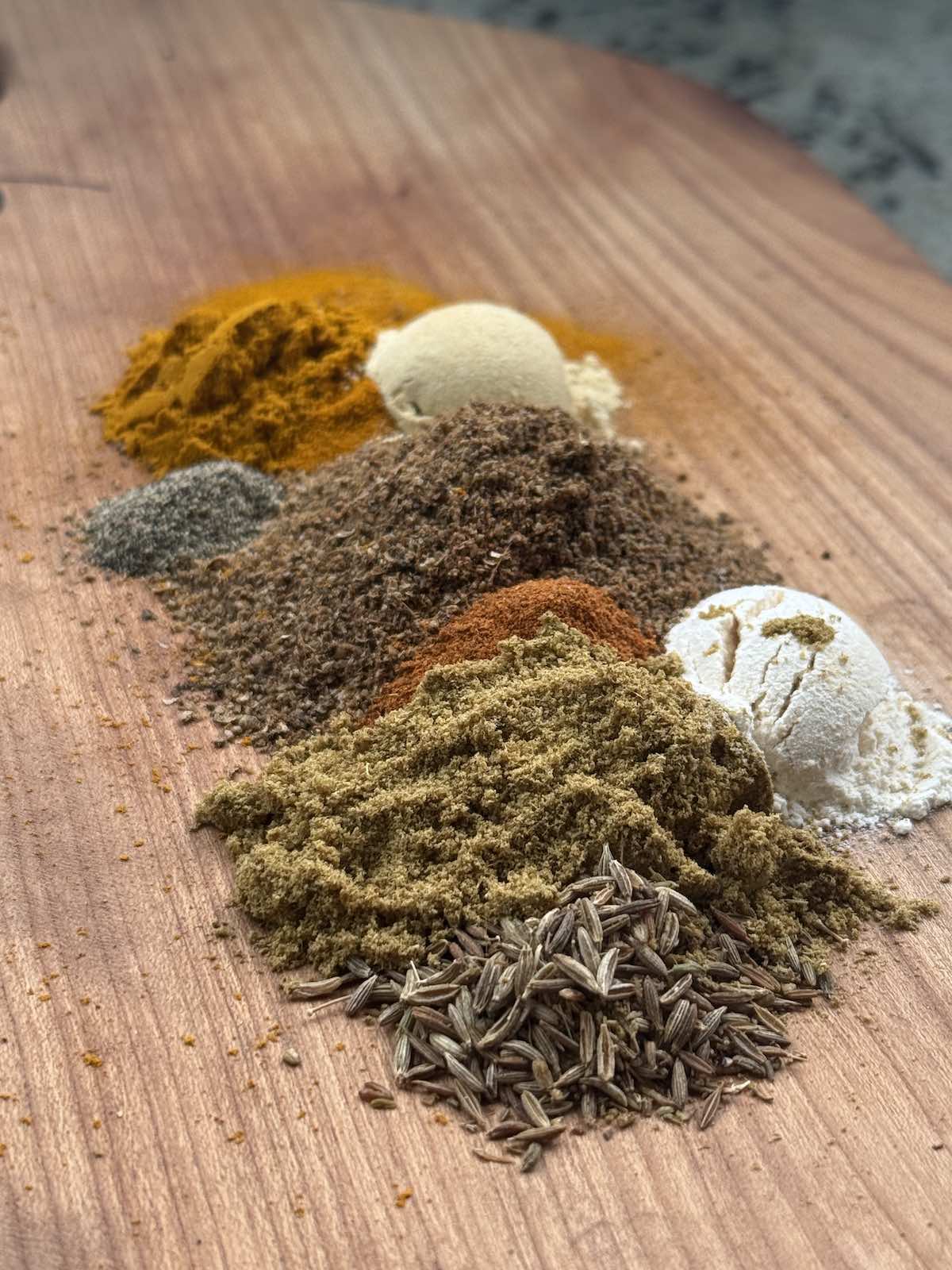
- One batch (about 13 tbsp/1/3 cup) yields enough for multiple recipes of different types (1-2 tbsp used ea time).
How versatile is this blend? Comparison with Japanese, Thai, and Jamaican curries
One reason this versatile homemade curry spice blend works so well across different styles is that it shares several core warm and earthy spices with many global curry traditions. While it’s most closely aligned with North Indian-inspired flavors (thanks to the garam masala base), it also overlaps nicely with milder Japanese curry, Thai yellow curry, and vibrant Jamaican-style Caribbean curries.
Jamaican curries often feature a bright yellow color from generous turmeric, along with allspice (pimento), thyme, and heat from Scotch bonnet peppers. Your blend won’t replace a dedicated Jamaican curry powder or fresh aromatics used in Thai (and Vietnamese), but it provides an excellent flavorful foundation that’s easy to adapt.
Global curry styles comparison table
| Spice / Flavor Note | Sofa’s Curry Spice Blend | Japanese Curry | Thai Yellow Curry | Jamaican Curry | Notes |
|---|---|---|---|---|---|
| Turmeric | Yes (strong) | Yes | Yes | Yes (very high amount) | Signature golden color across all |
| Cumin | Yes | Yes | Yes | Yes | Earthy backbone |
| Coriander | Yes (via garam masala) | Yes | Yes | Yes | Very common |
| Ginger & Garlic | Yes (powder) | Yes | Yes (often fresh) | Yes | Aromatic foundation |
| Warming spices (cinnamon, cardamom, clove, nutmeg) | Yes (via garam masala) | Yes (mild) | Sometimes | Yes (mild + allspice) | Adds warmth and depth |
| Heat | Light & adjustable (cayenne) | Usually mild | Can be hotter | From Scotch bonnet peppers | Your blend is milder — easy to boost |
| Allspice (Pimento) | Possible (trace in garam masala) | No | No | Yes (prominent) | Signature Jamaican flavor |
| Fresh aromatics (lemongrass, galangal, lime leaves, thyme) | No | No | Essential (lemongrass etc.) | Yes (thyme + Scotch bonnet) | Missing – add fresh herbs/peppers for authenticity |
| Fenugreek / Fennel | Possible (in garam masala) | Often present | Sometimes | Often present | Common in many blends |
| Sweetness / Thickness | No | Yes (roux + apple/onion) | From coconut milk | Often from coconut milk or stock | Japanese is thicker/sweeter; others vary |
As the table shows, this curry spice blend recipe covers many of the warm, savory, and golden turmeric-forward spices found in Japanese, Thai yellow, and Jamaican curries.
Examples of how this spice blend can be adapted to any curry recipe you might encounter:
- For Japanese-style: Use the blend as a base, then add sweetness (honey or grated apple) and thicken with a roux.
- For Thai-inspired: Layer in coconut milk, fresh lemongrass or galangal, and lime.
- For Jamaican-inspired: Boost with ground allspice (pimento), fresh thyme, and Scotch bonnet (or habanero) peppers for that bright, aromatic island flavor. Many Jamaican recipes “burn” the curry powder in oil first for deeper taste.
This kind of overlap is what makes the blend truly versatile — one homemade mix gives you a strong starting point for exploring flavors from several culinary traditions with just a few simple additions.
Ingredient notes
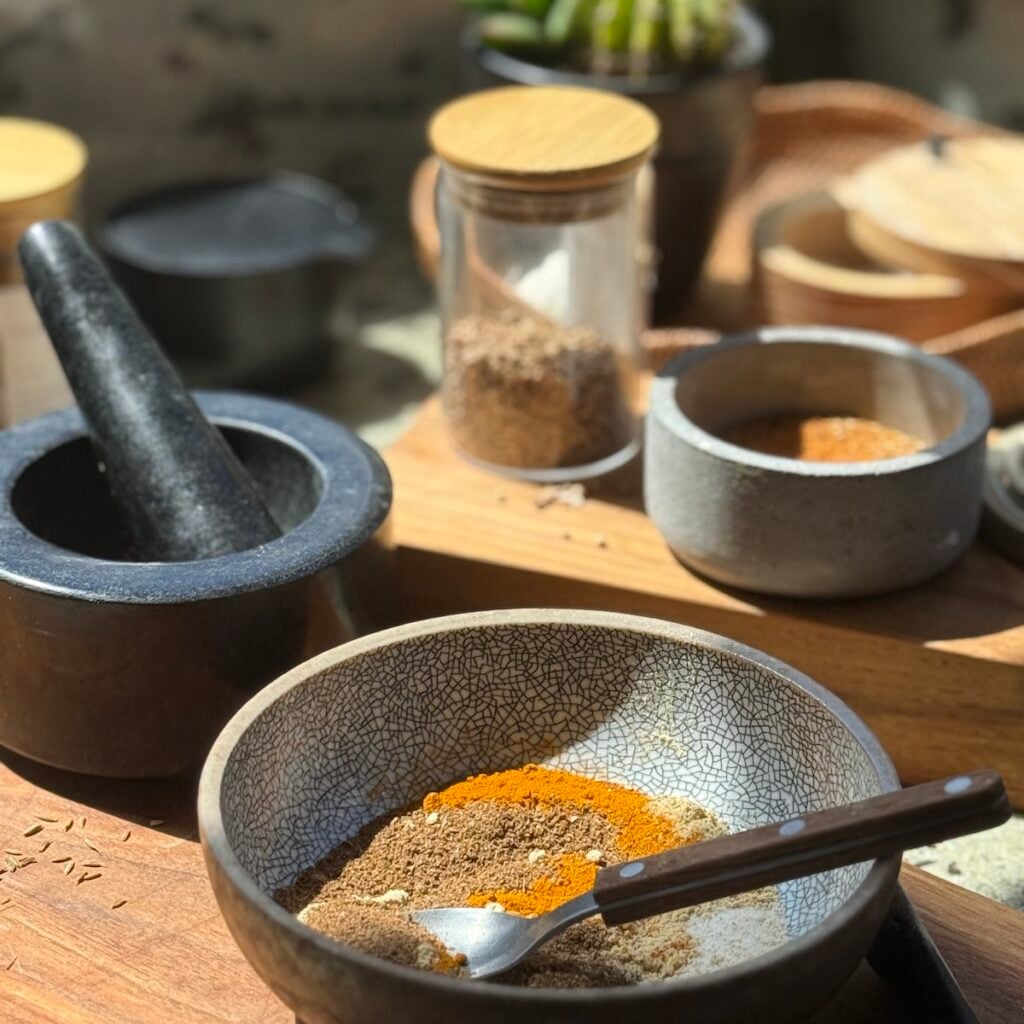
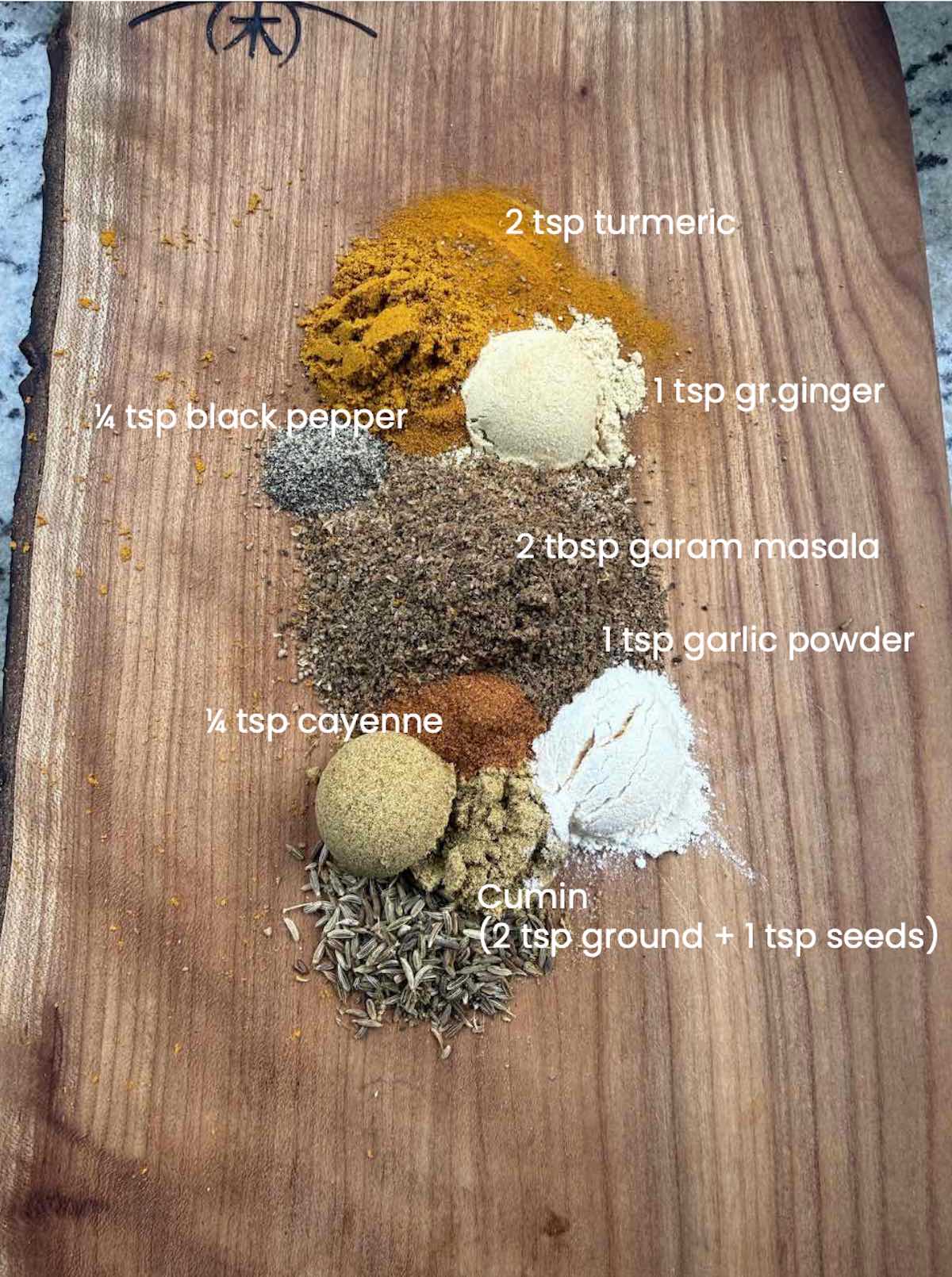
- Garam Masala (2 Tbsp) — the aromatic foundation (cumin, coriander, cardamom, cinnamon, clove, nutmeg, etc.). this gives the blend its warm, layered character.
- Turmeric — gives the signature golden color and mild earthy flavor. Note that this spice will stain your skin and clothes (not permanently) if you spill it.
- Ground Cumin — delivers warm, nutty earthiness; a curry essential.
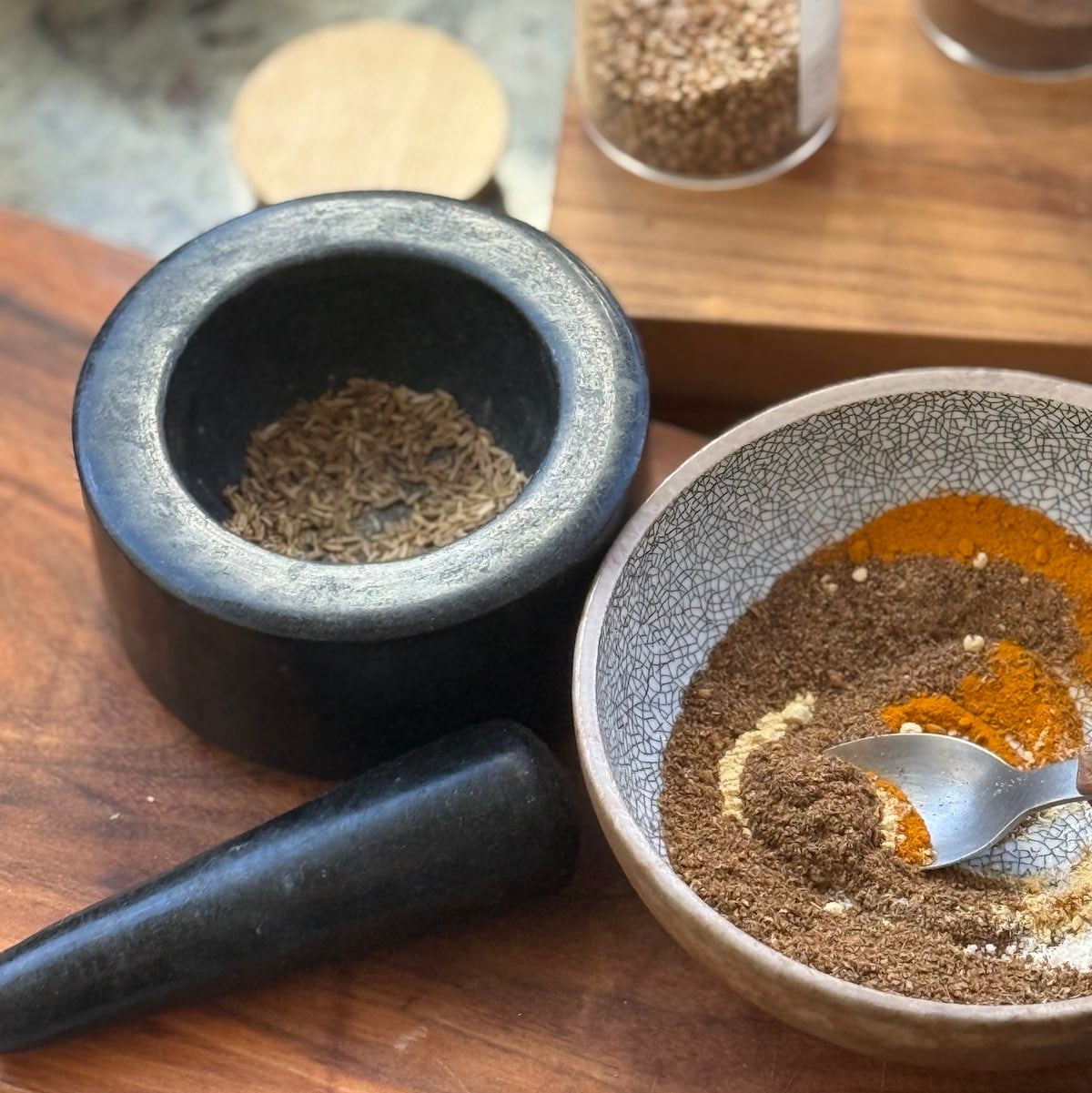
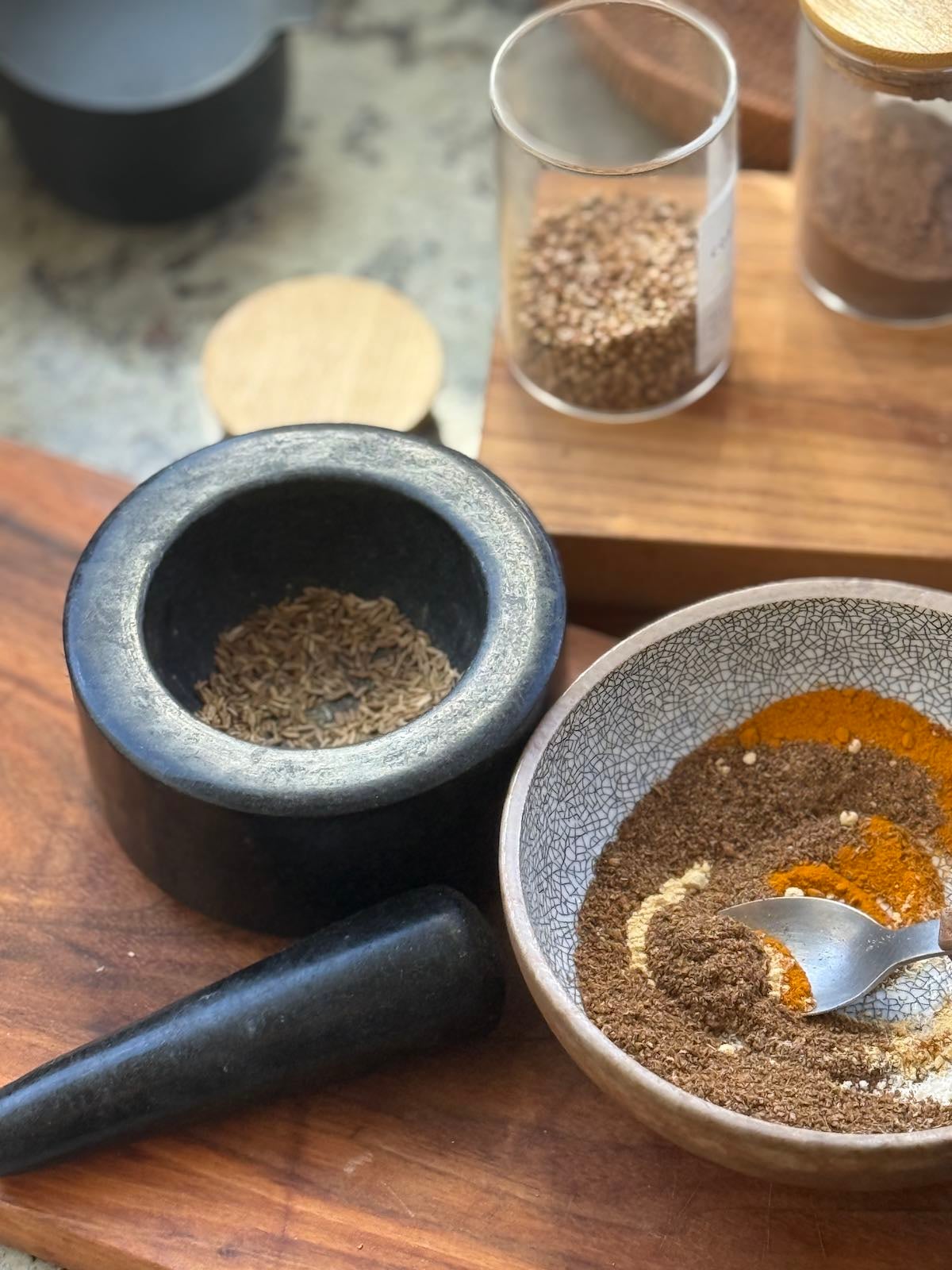
- Whole Cumin Seeds (optional) — add fragrant aroma and texture. Use all powder if you don’t enjoy the crunch of the seeds in the mix.
- Cayenne — provides gentle, adjustable heat (use 1/2 tsp for a medium heat blend).
- Black Pepper — sharpens and enhances the other flavors. Increase to 1/2 tsp along with cayenne for a medium heat.
- Garlic Powder — adds savory depth and classic curry aroma. Can replace the fresh garlic usually called for, in a pinch, or for convenience.
- Ginger Powder — brings warm, bright notes that balance the earthier spices. Like garlic, this can replace fresh ginger, or add an additional layer of ginger flavor to the fresh.
- Quick Tip: the blend is kept relatively mild so you can easily adjust heat when cooking, or increase cayenne and black pepper as mentioned, when making the blend.
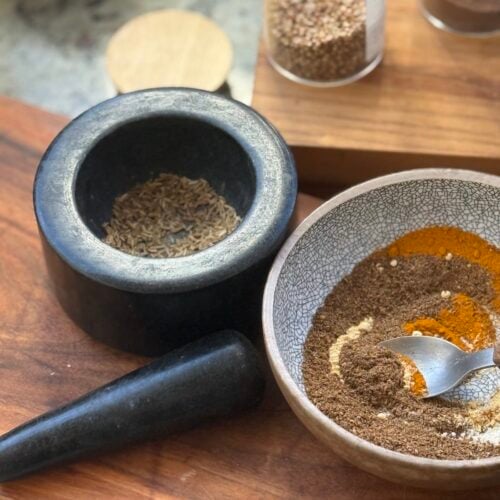
- Whole vs. ground spices: either can be used, whole spices should be ground first (except for the suggested portion of cumin seeds), using a morar and pestle, spice grinder (or coffee grinder), or a good ‘ol zip lock back and rolling pin (less precise 😉 ).
- Toasting spices: for ease, this recipe is based on using spices as is. It is common to toast whole and/or ground spices before using to enhance the flavor. I prefer for this to occur at the time of using the spices in a recipe.
Why No Fenugreek Seeds?
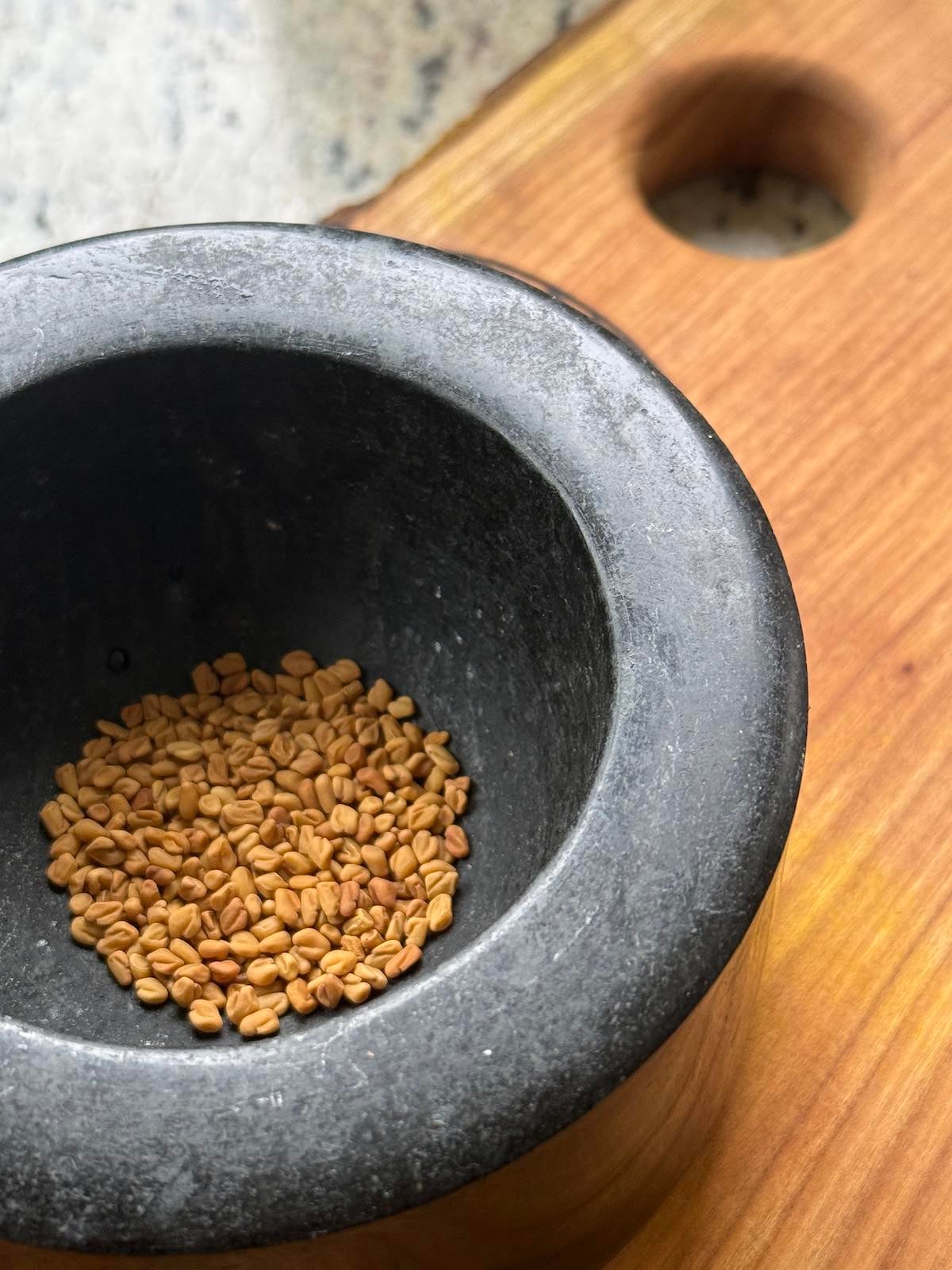
You’ll notice this blend does not include fenugreek seeds (or powder), which are common in many traditional curry powders. I left them out because they can be hard to find and have a strong, slightly bitter, maple-like flavor that not everyone enjoys.
If you want to add it for a more classic curry depth: Start with ½–1 teaspoon of fenugreek powder (or a few crushed seeds toasted lightly).
Good substitutes if you can’t find fenugreek:
- A pinch of ground celery seed (for similar subtle bitterness)
- Extra cumin or a touch more garam masala (to maintain warmth without the unique fenugreek note). I like the balance of flavor as it is. A sweetener is sometimes added in a recipe at cook time, I’ve found.
Ways to use this versatile homemade curry spice blend
This blend delivers warm, aromatic flavor quickly without measuring a dozen individual spices. Here are some of my favorite ways to use it, including recipes on the site (link to recipes through recipe name below), as well as easy ideas and pro tips below that:
Mains with animal protein (high protein, high fiber)
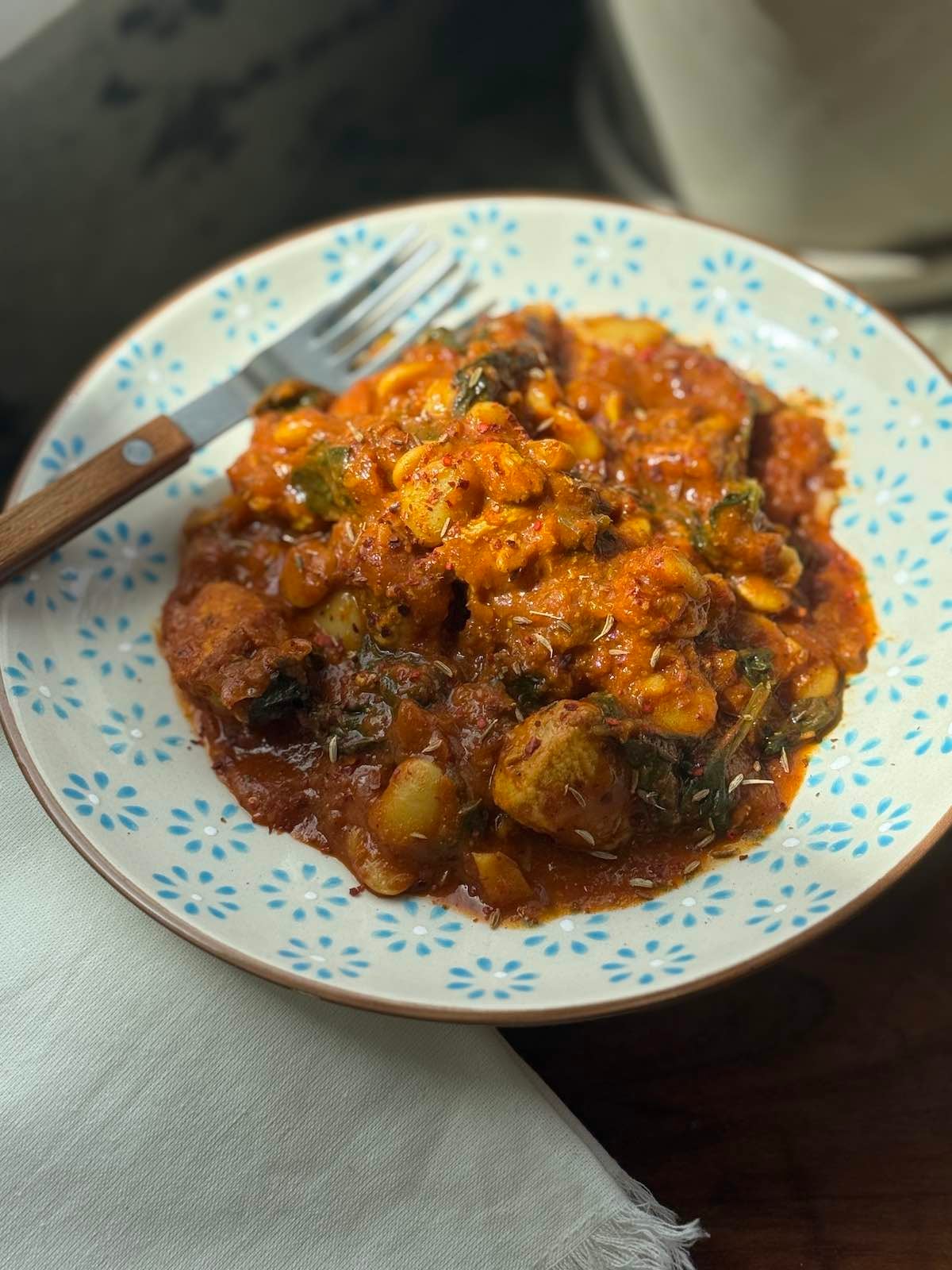
- Turkey Curry with Greens and Beans — A quick weeknight favorite. Seared turkey is seasoned with the blend, then simmered in a tomato-coconut milk sauce with spinach and butter beans. Ready in about 40 minutes and packed with protein. Full recipe coming very soon!
- Pork Satay (thai coconut dressing + curry marinade) — Slabs of pork tenderloin are marinated satay style, brushed with the spice infused curry marinade while grilling, then topped with a unique coconut cucumber yogurt dressing and satay drizzle sauce (no peanut sauce).

Plant-Based Mains
- Healthy Vegetable Bhaji — Crispy, spiced vegetable fritters pan fried or oven baked. The blend gives them that signature golden color and warm flavor. Served with a lemon curry yogurt sauce. Bright and warm at the same time.
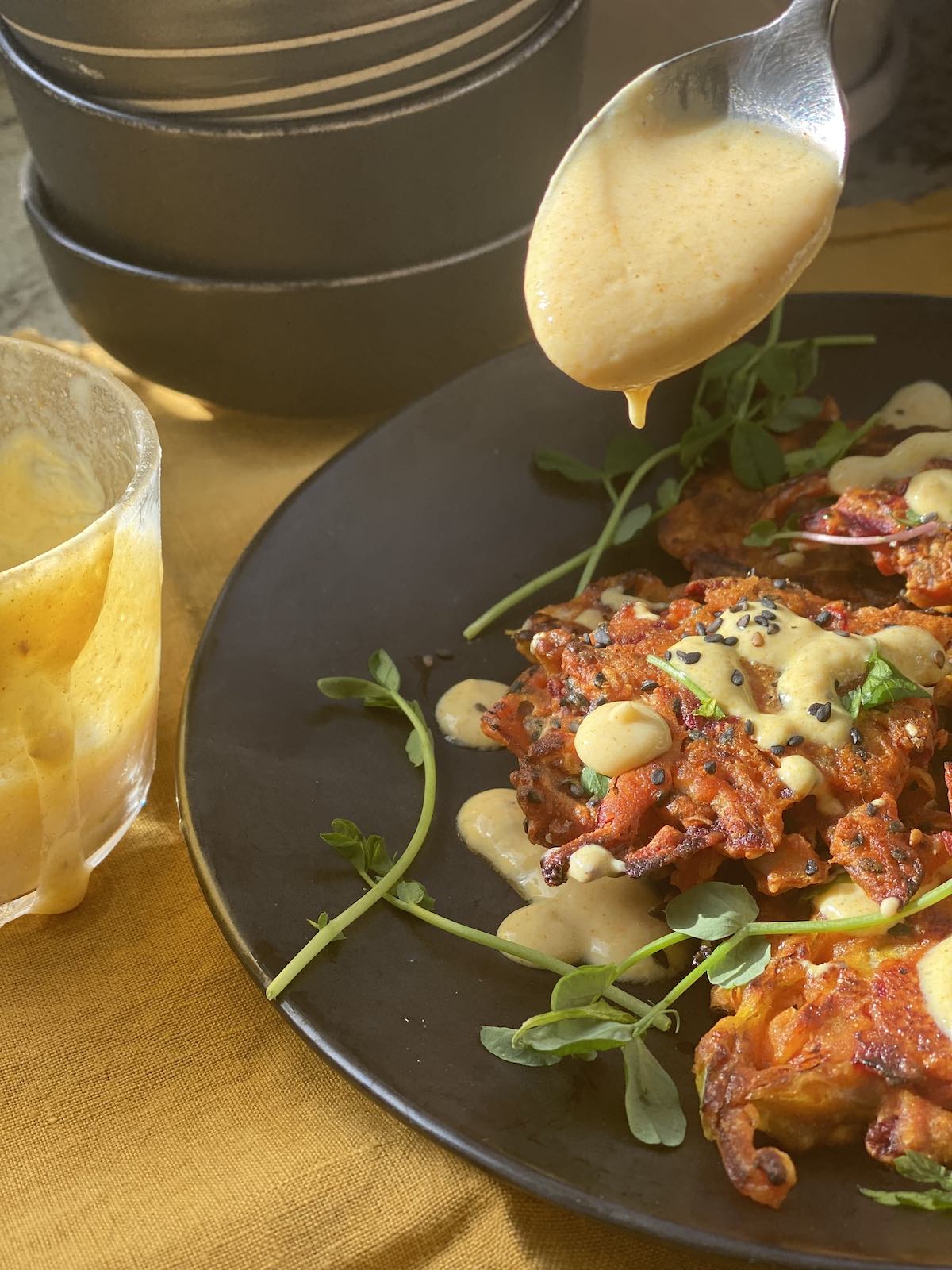
- Vegan Veggie Burgers — Mix the blend into your patty mixture for a delicious curry-spiced kick. They pair beautifully with the lemon curry yogurt sauce on top and deliver a new flavor/texture from most veggie burgers.

- Veggie Satay (curry marinade drizzle sauce in place of peanut sauce) — Slabs of vegetables are marinated satay style, brushed with a curry spice infused marinade while grilling, then topped with a unique coconut cucumber yogurt dressing and the curry drizzle sauce.

More Easy Ideas
- Quick Chicken or Shrimp Curry — Season 1–1.5 lbs meat with 2–3 Tbsp of the blend. Brown, then simmer with onions, garlic, tomatoes or coconut milk, also flavored with 1+ tbsp of the blend and your favorite vegetables.
- Roasted Vegetables or Chickpeas — Toss cauliflower, sweet potatoes, carrots, or chickpeas with 1–2 Tbsp blend + oil. Roast at 425°F until caramelized. I do this with my harissa blend and you can vary my two cauliflower recipes using this spice blend instead!
- Lentil Dal or Simple Stew — Sauté onions with 1–2 Tbsp blend, add red lentils or chickpeas, tomatoes, and broth. Finish with greens.
- Yogurt Marinade — Combine 2–3 Tbsp blend with ½ cup yogurt, garlic, ginger, and lemon for chicken, shrimp, paneer, or veggies before grilling or baking. This is the basis of many Indian curries.
Pro Tips
- Start with 1–2 Tbsp per pound of protein or 4 servings of vegetables — taste and add more as needed.
- “Burn” the spice blend in hot ghee or oil for 20–30 seconds before adding other ingredients. This deepens the flavor (a common technique in both Indian and Caribbean cooking).
- The blend is relatively mild, so it’s easy to customize heat with extra cayenne in the mix or fresh chilies while cooking.
Once you have a jar of this blend in your pantry, it becomes a shortcut for all kinds of curries, marinades, roasted dishes, and even upgraded veggie burgers or bhajis.
Storage & Freshness Tips
- Store in an airtight container away from heat and light.
- Best used within 3–6 months for peak flavor.
- Make small batches, such as this recipe, frequently so your spices stay vibrant.
Plus, get emails weekly(ish) and when new recipes are published!
Versatile Homemade Curry Spice Blend Recipe
Made it? Click the stars to leave a review – I would be so grateful!
Click below for pop-up of recipe without ads:
Start CookingIngredients
All spices are ground powders (except for optional cumin seeds)
- 2 tbsp garam masala (see notes for sub)
- 3 tsp cumin (2 tsp ground, 1 tsp seeds see notes)
- 2 tsp turmeric
- 1 tsp garlic powder (sub dried granules)
- 1 tsp ginger powder
- 1/4 tsp black pepper
- 1/4 tsp cayenne
Instructions:
- Simply mix all ingredients (including the 1 tsp whole cumin seeds) together to make approximately 1/3 cup of mix. My turkey curry uses 2 tbsp per recipe, which I would say is pretty standard for any recipe you want to use this mix in that serves 4.
- If you truly love a medium to spicy curry, I recommend doubling the cayenne and black pepper. Those two flavors together form a classic kind of heat one gets from a spicy curry.