Homemade Spice Blend Recipes: My Go-To Mixes + How I Create My Own

Try one of my go-to spice blend recipes — Harissa, Chili Powder, Asian Blend and more. Learn how I use them and how I tweak traditional blends with unique inclusions to create versatile, next-level, custom mixes that make recipes pop with deeper, more vibrant flavor.
After years of cooking recipes that call for multiple spices — and making extra trips to the store for a teaspoon of this or that — I noticed overlaps based on cuisine. I began creating my own spice blends that could be used for multiple recipes. They all include: the must-have spices for the flavor profile, smart hacks and unique touches that let me skip some fresh ingredients altogether, if needed, making it easier to cook.
In this guide you’ll learn:
- The benefits of making homemade spice blends
- What spice mix recipes I make, (with links)
- What recipes I make with the mixes.
Finally, you’ll learn the method behind the creation of my blends that you can apply to create your own spice blends, along with everyday uses, pairing suggestions, and a bit about flavor harmony to guide you on your way.
Why homemade blends taste better + save money
Store-bought spice blends are convenient, but they often fall short compared to homemade. Here’s why I almost always make my own (unless I’m in a pinch):
- Fresher, bolder flavor — Commercial blends can sit on shelves for years, so the spices lose their volatile oils and taste flat or dusty. Homemade versions use spices at their peak.
- More thoughtful ingredients — Store mixes tend to be generic with a focus on the less expensive spice. I add ingredients that actually match the real recipes I cook (dried shiitake for umami in my Asian blend, garlic + ginger powder in Butter Curry, extra sumac in Za’atar, nori in Furikake). The result is a more vibrant, layered, and intense flavor.
- Better value — Simply put, bulk spices are cheaper, you can buy only what you need, and tailor the ratios to your preferences (more heat, more smoke, etc).
Bottom line: Homemade blends don’t just save money (see section and table below) — they deliver noticeably better flavor and give you more control. One or two bulk spice purchases usually pays for itself before you’re even home from the store!

Pro tips for maximum savings and flavor:
- Buy from bulk bins whenever possible (sometimes a big bag of a spice from an ethnic grocery like Hmart or your local Asian grocey might be cheaper as well).
- Consider buying bulk spices in their whole form (i.e. cumin seed instead of ground cumin) for versatility and flavor.
- Toast especially whole spices before mixing (it wakes up the flavor for free). You can toast the ground mix before using, if so inspired, to further bloom the spices.
- Reuse your empty jars from storebought, to house new bulk spices you buy.
- Invest in a morter and pestle or cheap spice grinder, for using whole spices (not necessary, but allows for whole spice options).
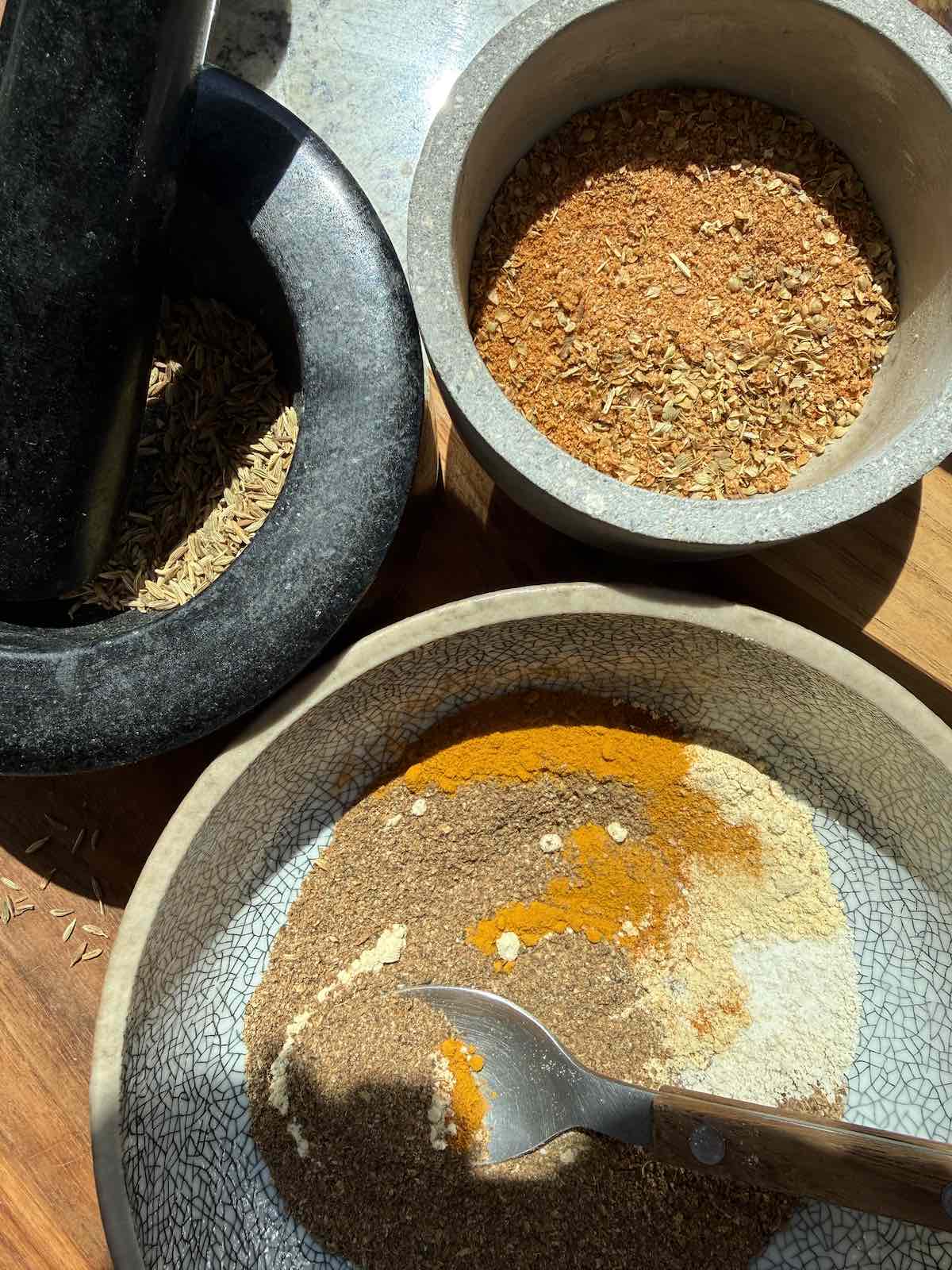
Buying spices in bulk: a game-changer
Switching to bulk spices transformed my spice quality, budget, and storage.
Spice Cost Comparison (approx. current US prices)
| Spice | McCormick (1.8 oz bottle) | Frontier (1.8 oz premium brand) | Bulk (per oz) |
|---|---|---|---|
| Ground Cumin | $3.50 – $5.50 ($2–$3/oz) | $5 – $8 ($3–$5/oz) | $0.50 – $1.00 |
| Paprika, Coriander, Turmeric | $3 – $6 ($2–$3.50/oz) | $5 – $9 ($3–$5/oz) | $0.40 – $1.20 |
Key takeaway: Just 1 oz of bulk spice (enough for several batches of blends) often costs under $1, while a small bottled jar costs 3–8× more — even though you’re getting a similar or smaller amount.
Without getting overly scientific, yesterday I brought home 8 little bags of different spices from the bulk bins for $7.11. If I’d grabbed a bottle of each of the 8 spices it would have cost around $48. Granted, you could argue you’d have more on hand if you grabbed the bottle, but it might go dull before you use it and using bulk spices is ALWAYS cheaper per oz/lb.
Pro tip: Overwhelmed? start with the spices you use most (cumin, paprika, garlic powder, etc.). Buy from bulk bins or online bulk suppliers and store them in your own jars.
How to store bulk spices
Don’t let plastic bags pile up. Simple solutions:
- Reuse empty spice jars, honey jars, or small glass containers you already have.
- Use inexpensive deli containers from the grocery store.
- Keep the bulk bag in a cool dark cabinet and scoop into a daily-use jar as needed.
For a neater setup, I recommend this affordable spice jar set with bamboo lids and beautiful labels.
For options of how to keep those cool spice bottles organized try one of these drawer or shelf spice jar organizer options.
Pro tip: Store all spices in a cool, dark place. The above links are not affiliate links, just options I love.
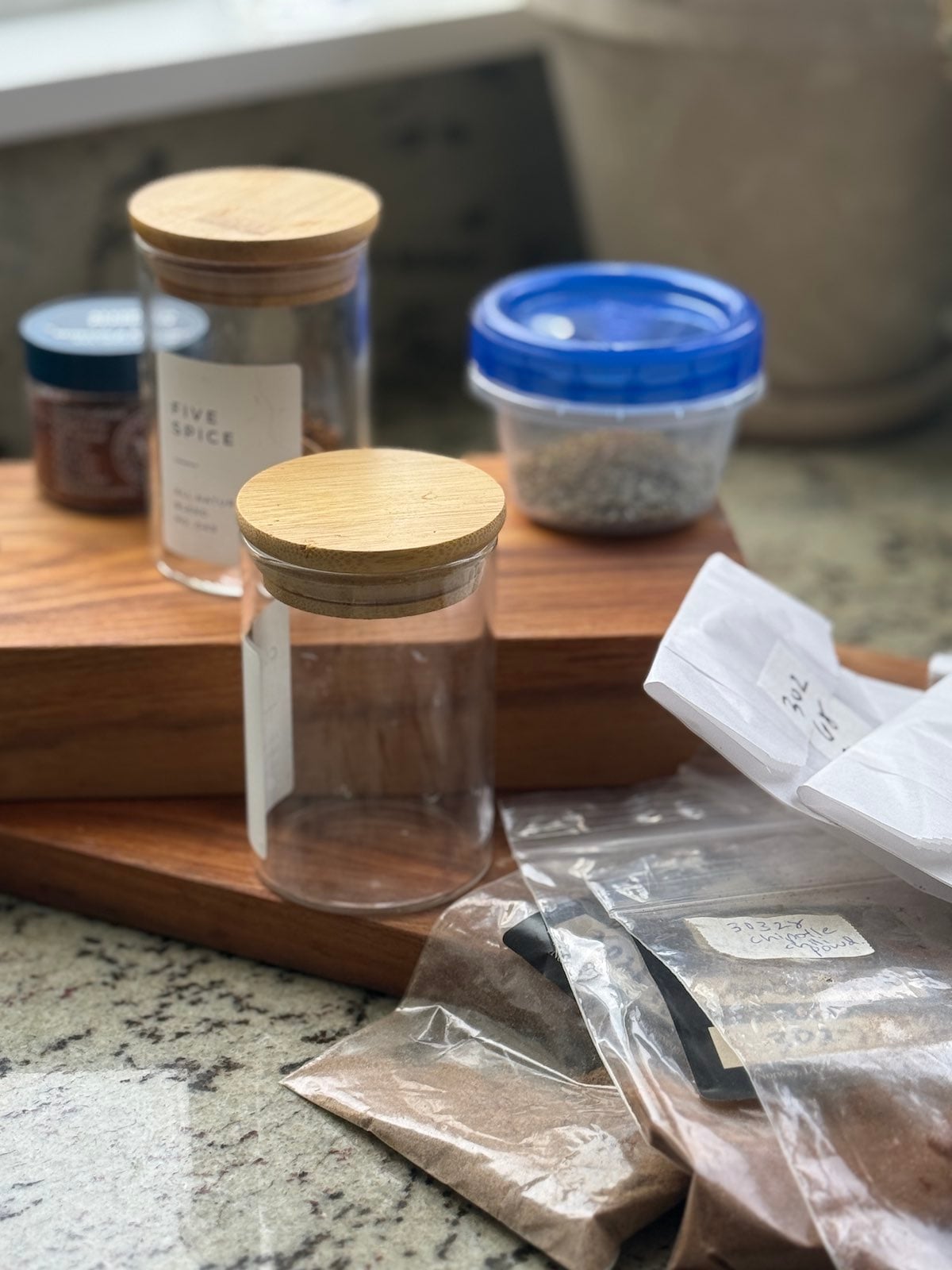
What it entails to make one of my spice mix recipes
All the spice mix recipes published on my site follow the same straightforward process. Here’s exactly what’s involved:
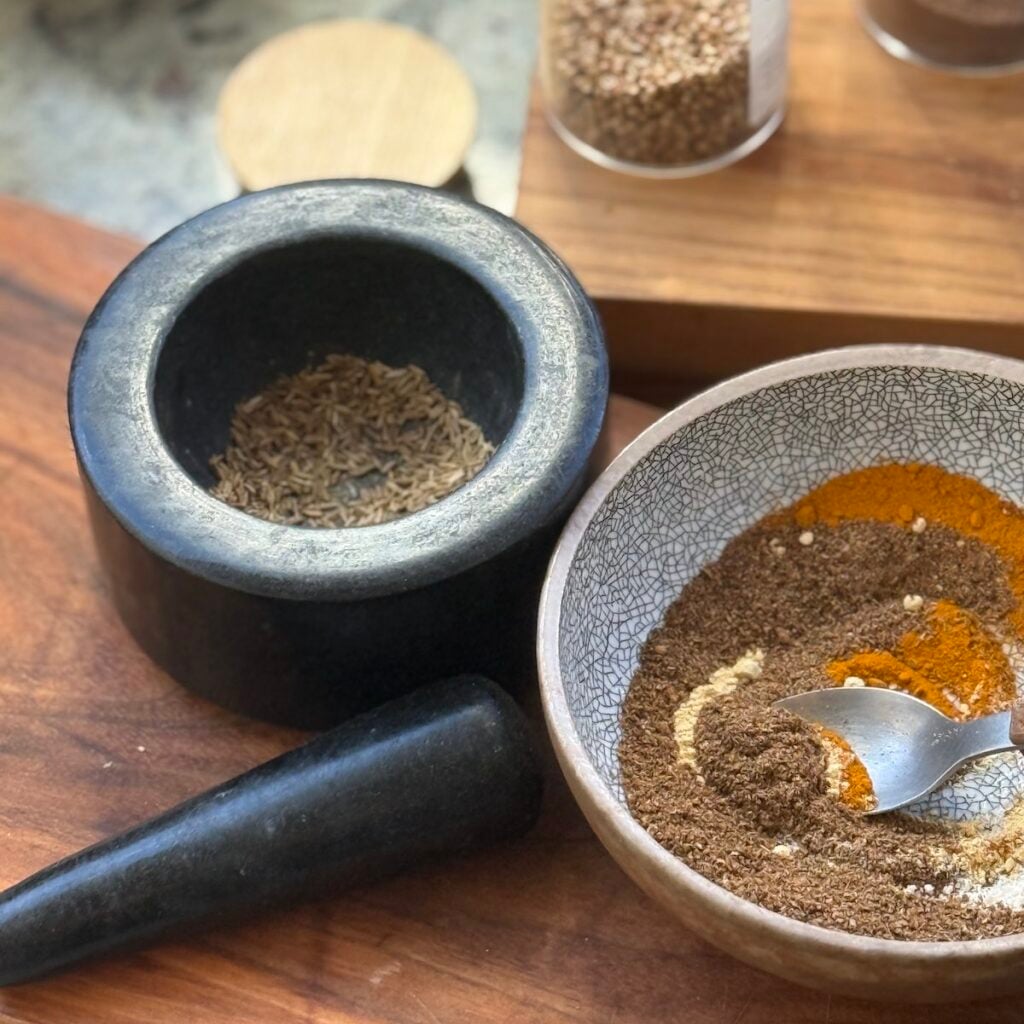
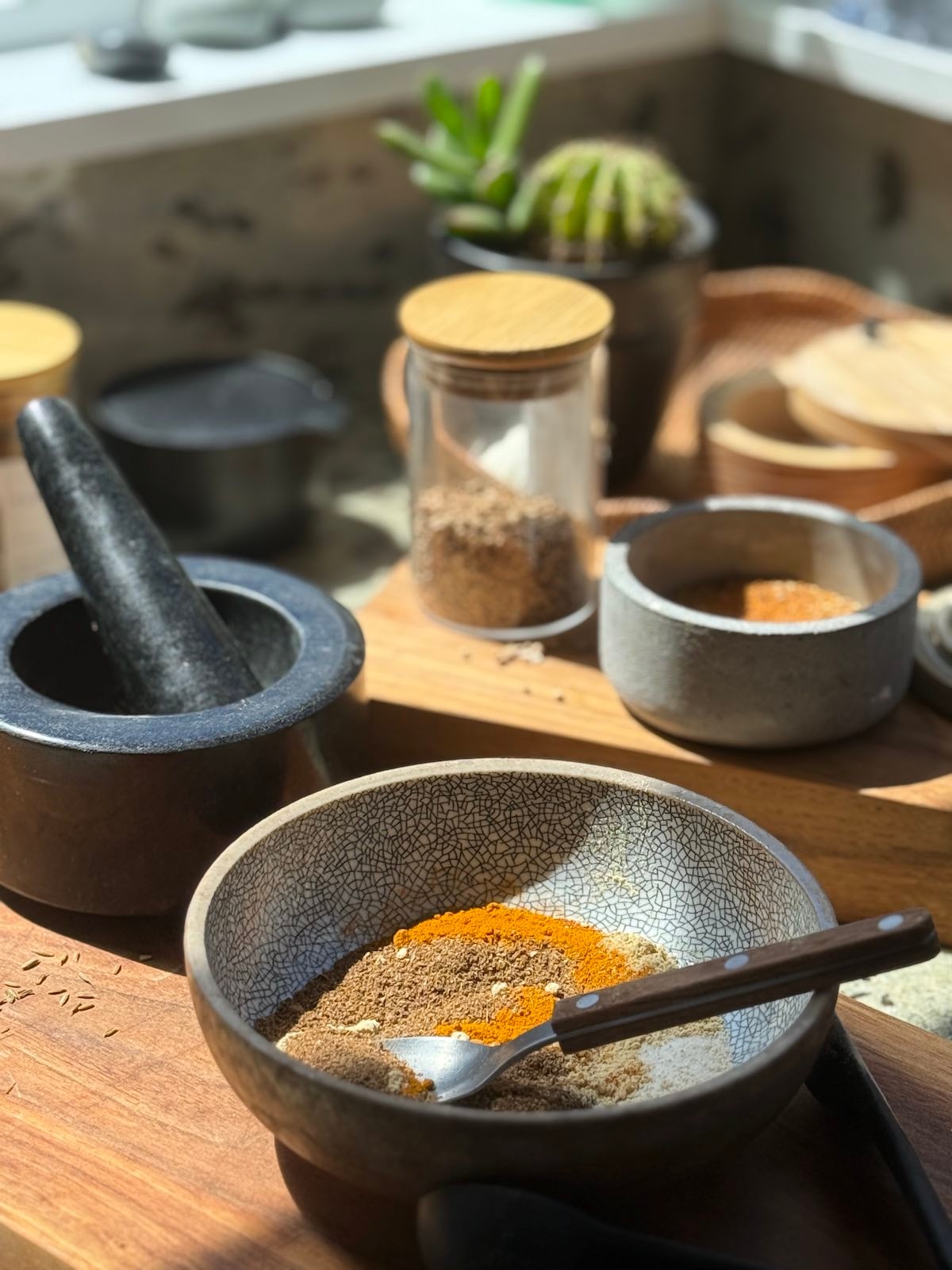
- Tools needed: Just a small bowl or jar and a spoon or whisk. For whole spices, dried chiles, nori, or mushrooms, use a mortar & pestle, coffee/spice grinder, or even a rolling pin.
- Toasting (when needed): Many blends taste better when you lightly toast whole seeds (sesame, cumin, coriander, etc.) in a dry pan for 2–4 minutes until fragrant. I do this for my Harissa, Chili Powder, and often for Za’atar.
- Mixing: Combine all ingredients in a bowl and stir thoroughly until evenly blended. That’s the main step.
- Little Tips for Success:
- Grind larger dried ingredients (chiles, shiitake mushrooms, nori) so the flavor distributes evenly.
- Include powdered aromatics (garlic powder, ginger powder) as built-in convenience.
- Taste a tiny pinch on something neutral (rice, tofu, or a mushroom slice) and adjust salt, heat, or brightness.
- Make batches that last 2–3 months and store in airtight jars in a cool, dark cabinet (most stay flavorful for about 6 months).
This simple method is how all my published blends — both finishing and blend in mixes — come together quickly.
Spice blends versus finishing spices
Spice blends can be meant for adding deep flavor during cooking of a recipe (such as curry, shawarma, five spice, harissa, chili powder), but some are developed specifically to add finishing flavor to a dish (sprinkled over individual servings at the table) such as Za’atar, Furikake, Tajín, and even the hugely popular and commercialized Everything Bagel Spice! Keep checking back here as I develop many of these spices for my site, if I haven’t already.

Try one of my go-to spice blends
- Homemade Harissa Seasoning: whereas harissa is a spicy red pepper and chili paste used in Middle Eastern cuisine, my dried powder spice blend alternative is more versatile, and can also be turned into a similar paste as my Harissa BBQ Sauce! Use it as an alternative or create your own paste.
- Chili Powder: with so much more roundness of flavor, my homemade version of the staple “chili powder” uses whole dried chilis which are much more readily available than you might think. It’s got a great smokiness, not prevelent in storebought powders.
- Asian Spice Blend: this is very popular with people using my recipes, even if it seems a bit more unusual. I’ve taken typical savory and sweet flavors used in bulgogi or stir fry style dishes and created a dry blend that really hits the spot. Versatile, not too spicy, not too salty, just the right mix. Ways I’ve used it in my recipes are with Tempeh Tahini Noodles, Mongolian Shaved Beef and noodles, Asian Coleslaw with Spicy Marinated Shiitake Mushrooms, or Spicy Sesame Marinated Beech Mushrooms and even Tofu Mushroom Lettuce Wraps.
- Another spice blend of mine called Homemade Furikake acts as a finishing spice that you sprinkle on top of a dish. Traditionally, this blend is also used as a Japanese rice seasoning, but it can be sprinkled on top of many dishes. Think of an “everything” bagel spice, but for Asian dishes 🤩.
- My Homemade Curry Spice Blend combines all the usual spices for curries in just the right ratios. Interestingly, it can be used for many different curry styles from across the globes, some with a few tweaks. The recipe post includes a cool comparison table of the spices and how they are used across styles. You can try it in my Seared Turkey Curry with Spinach and Butter Beans.
How I create my spice blends (so you can too)
Over the years, I’ve realized the blends I reach for most come from the cuisines I cook on repeat. If I keep returning to Middle Eastern, Indian-inspired, Japanese, or Mexican-style dishes, that’s my sign it’s time to build a dedicated mix (just like I did with my Harissa, Asian, Furikake, and Chili Powder blends).

Here’s my simple process:
- Start with the cuisine or flavor goal. Warm and earthy? Bright and tangy? Sweet-savory with umami? Smoky with heat? This helps me focus. Often I’ll work from a recipe for a specifc dish. For example, I referenced chili recipes to create the chili powder, even though the finished blend works for taco meat, or other Mexican dishes.
- Research traditional ingredients, then simplify. I look at what shows up again and again, adjusting to use pantry staples, if any of the choices seem too esoteric and can be substituted for more accessable spices.
- Add smart convenience hacks. Fresh garlic or ginger in the original dish? Fold in the powders. Need citrus brightness? Add sumac, dried lime zest, or Aleppo chili flakes. These make the blends even more flavorful than their storebought traditional options and leave space for eliminating fresh aromatics in a pinch. If I do use the fresh aromatics along with the dried version in the blend, it only enhances the dish with layers of flavor.
- Mix in simple ratios and taste as I go. I often start with a loose 3:2:1 (base spices for body, supporting flavors, bright/spicy accents). Test a pinch on plain rice or other neutral ingredient and adjust the ratio if needed (i.e. too peppery, or overpowered with garlic, etc.)
Did you know: some spices we take for granted as being a single spice, such as chili powder or curry powder, are already blends of multiple spices. Picking these apart and reading the bottles before diving in really helps me to understand how the flavors are created.
The goal isn’t perfection — it’s creating something you love that saves time. Feel free to tweak any recipe in this guide.
If you want to dive deeper into spices before getting started on your own blend, check out the final section below on flavor harmony principles (no pressure!)
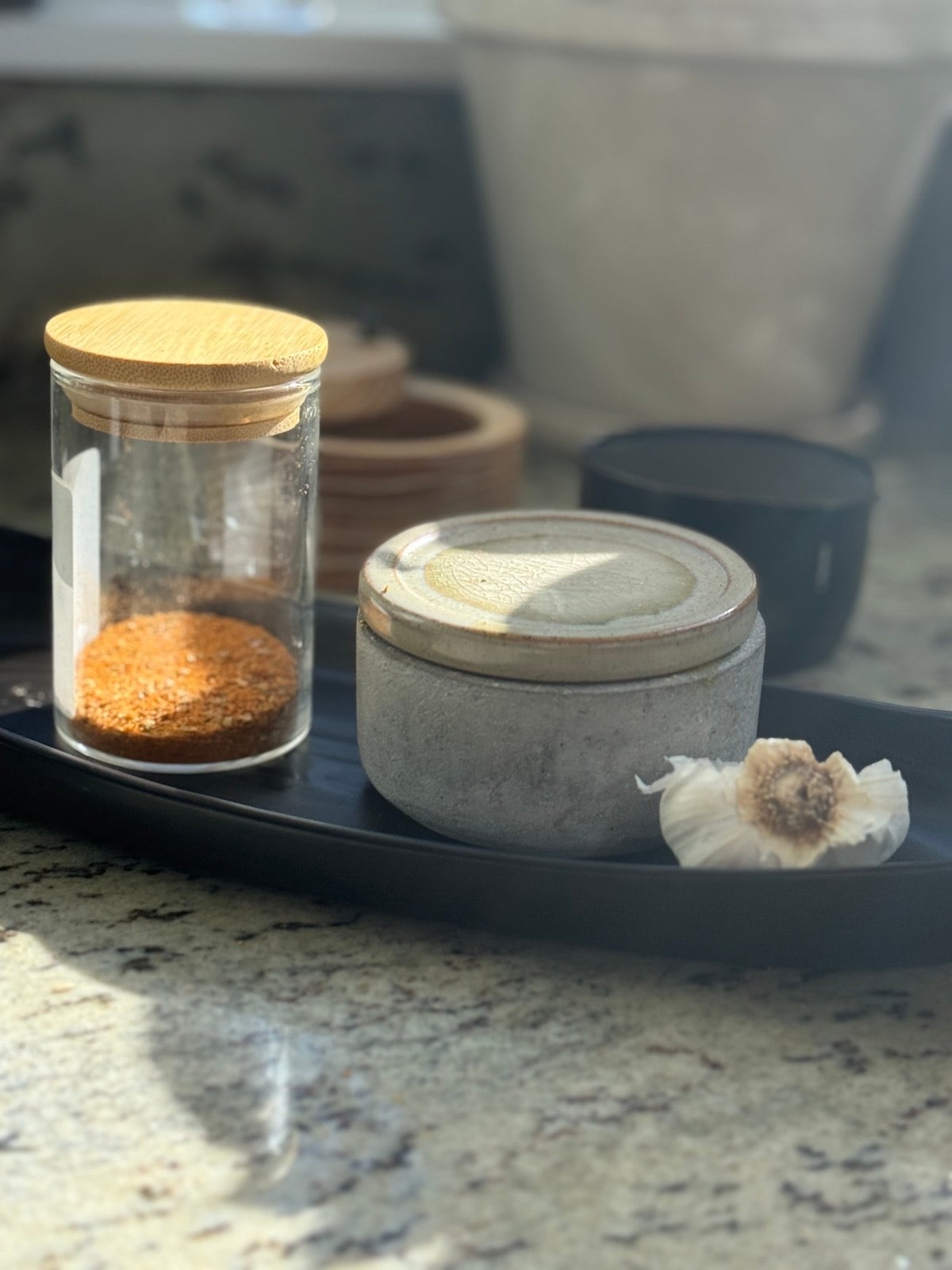
How to Use These Spice Blends in Everyday Cooking
With or without a recipe here’s how I use them on a daily basis:
Quick Applications
- Dry rubs and marinades as an initial step for any cooking method (for the veg in my chili recipe)
- Stirred into yogurt, coconut milk, tahini dressing or miso for instant sauces and dips
- Finishing sprinkle for crunch and brightness on grain bowls, avocado toast, roasted vegetables, or popcorn
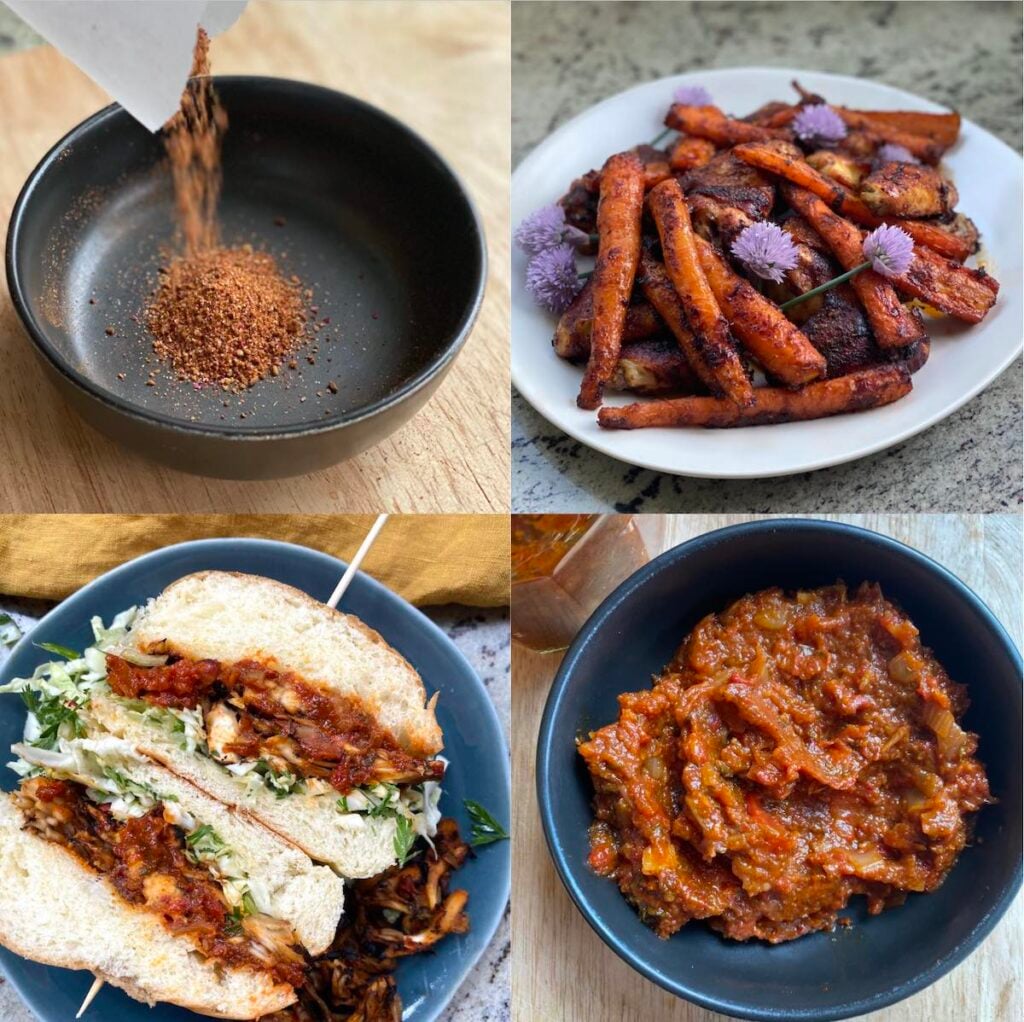
- Sprinkled over sheet-pan dinners for hands-off meals (i.e. harissa wings and carrots!)
Pairing Ideas
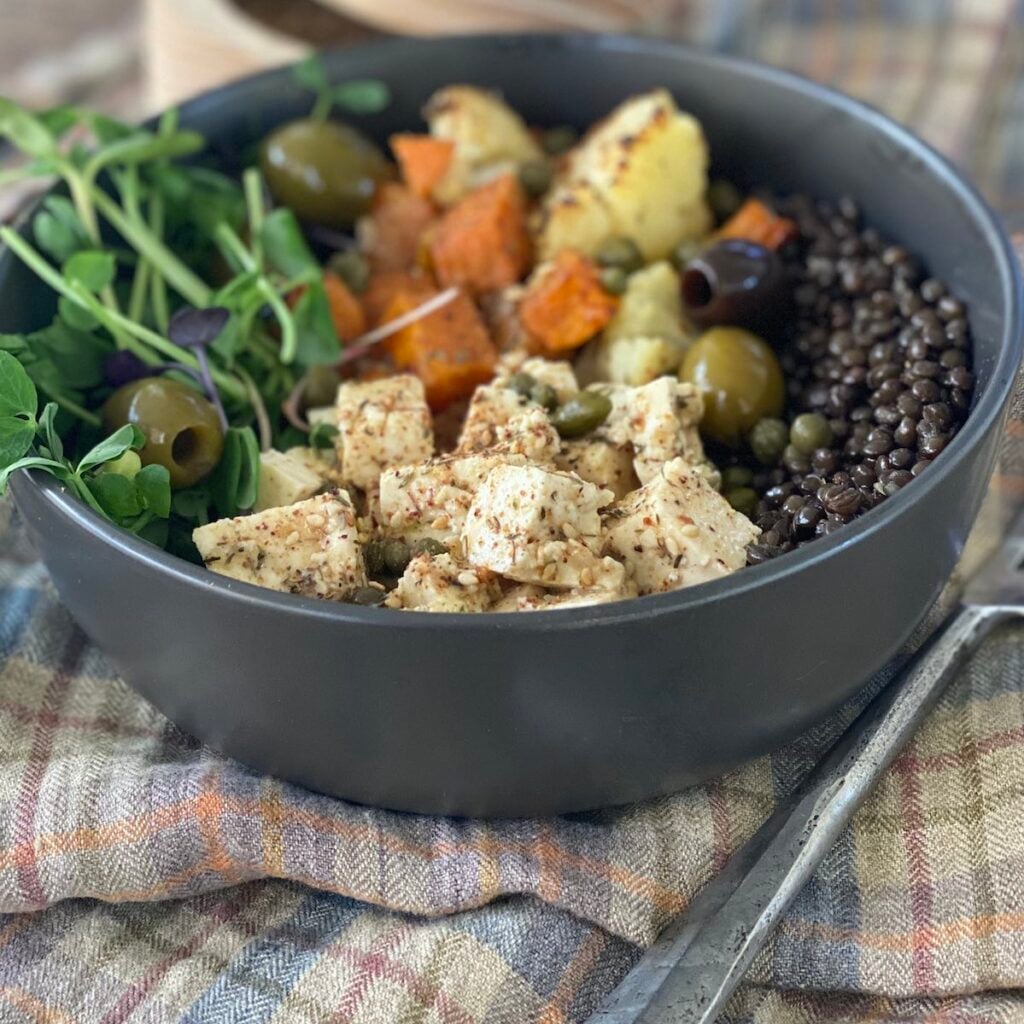
- Za’atar in marinated tofu for Mediterranean bowls or toast
- Harissa on roasted mushrooms for vegan jerky, tacos, or cauliflower steaks
- Asian Blend or Furikake as a rice topper or on miso carrot soup
- Chili Powder tossed with vegetables before roasting for smoky flavor and char, or to season taco meat of any kind (including vegan versions).
Tips for Success
- Start light with salt and heat — adjust at the table.
- Layer flavors: Use a cooking blend in the base + a finishing blend on top.
- Portion weekly “spice kits” for even faster meals.
- Experiment freely — these are starting points.
Once you start reaching for them regularly, you’ll wonder how you cooked without them.
Complementary Spice Pairings
These combinations layer flavors beautifully — one for depth during cooking and one for brightness or texture at the end. Use my site’s “search” function to plug in the main blend name from below and see what recipes I’ve used it in. See the “Recipes” column below to get a sense of how I’ve used it so far. Or, click through to the spice blend from the main blend links.
| Main Blend (Cooking) | Finishing Blend | Recipes | Flavor Result |
|---|---|---|---|
| Harissa Seasoning | Za’atar (upcoming-I’ve used storebought) | BBQ sauce, roasted veg, grilled wings, popcorn snack, mushroom tacos | smoky heat + herby tang |
| Curry Spice Blend | Tajín-style (upcoming) | upcoming curry dish, bhaji dip, stay tuned! | warm, nutty richness + bright chili-lime |
| Eastern Mediterranean (upcoming) | Za’atar | schawarma style poultry rub, stay tuned! | bold savory + bright & tangy |
| Asian Spice Blend | Furikake | bulgogi style stir-fries, seared tempeh, mongolian beef noodles, and more! | salty/sweet + savory umami |
| Chili Powder | Tajin-style (upcoming) | vegetable chili, tacos, street corn style recipes | complex smoke + bright chili-lime |
Quick Rule of Thumb: Pair a Cooking Blend (for deep flavor) with a Finishing Blend (for pop and texture). This is my favorite way to make simple meals taste next-level.

A final word about flavor harmony principles I use
Understanding a few basic flavor principles makes it much easier to create or tweak your own blends. I keep these in mind every time I build a new mix:
1. Balance the flavor ratio:
- Base (body & earthiness that creates the main flavor): Cumin, coriander, paprika, turmeric – easy on the palatte.
- Supporting (often adds warmth & depth with less needed): Cinnamon, cardamom, fennel, ginger – more distinct flavor.
- Bright/Accent (tang & bite, or crunch): Sumac, chili, citrus zest, garlic, sesame, toasted seaweed- a flavor that pops and adds something new at the end of the taste.
2. Contrast Creates Interest:
- Warm + Bright (Butter Curry + Tajín)
- Earthy + Tangy (Harissa + Za’atar)
- Savory + Sweet (Asian Blend + Furikake)
- Smoky + Fresh (Chili + Tajin)
3. Umami for Depth with dried mushroom powder, toasted nori, garlic powder. This flavor is harder to incorporate with dried ingredients (fish and soy sauce, miso, tomato paste, or cheese will lend more, but it’s worth considering when creating a blend).
4. Start Simple, Then Layer with 4–6 spices max. Add one element at a time until it feels balanced. Too flat? Add brightness. Too sharp? Add warmth or umami.
You may find only certain ingredients can be translated into something dry alongside the base spices (i.e. garlic or onion powder for fresh), but over time, you may discover ways to round out the blends. For example, I discovered dried lime zest is a thing, and at some point I thought of using toasted nori seaweed snacks crushed up as a stable ingredeint in my furikake mix!